
The neon-drenched streets of Night City had seen better days, or worse depending on which fixer you asked. Three years after the events of Phantom Liberty, the city still hummed with the same chaotic energy—drones buzzing overhead, the distant crack of gunfire, and the ever-present glow of advertisements promising immortality in a place where life was cheap. By 2026, fans had dissected every hidden corner of Dogtown, every encrypted shard, every whispered rumor about Rosalind Myers and her New United States of America. But in the quiet moments between firefights, a question lingered: what happened before V stepped into the Afterlife?
CD Projekt Red had already proven they could craft expansions that rewrote the emotional rules of Night City. Phantom Liberty didn't just add a combat zone; it cracked open the history books and let players shake hands with the most powerful person on the continent, President Myers herself. And yet, that encounter only scratched the surface. The real story—the one that made Dogtown a festering wound in the first place—was the Unification War, a conflict so brief yet so brutal that its echoes still rattled through every corpo boardroom and street kid's nightmares.
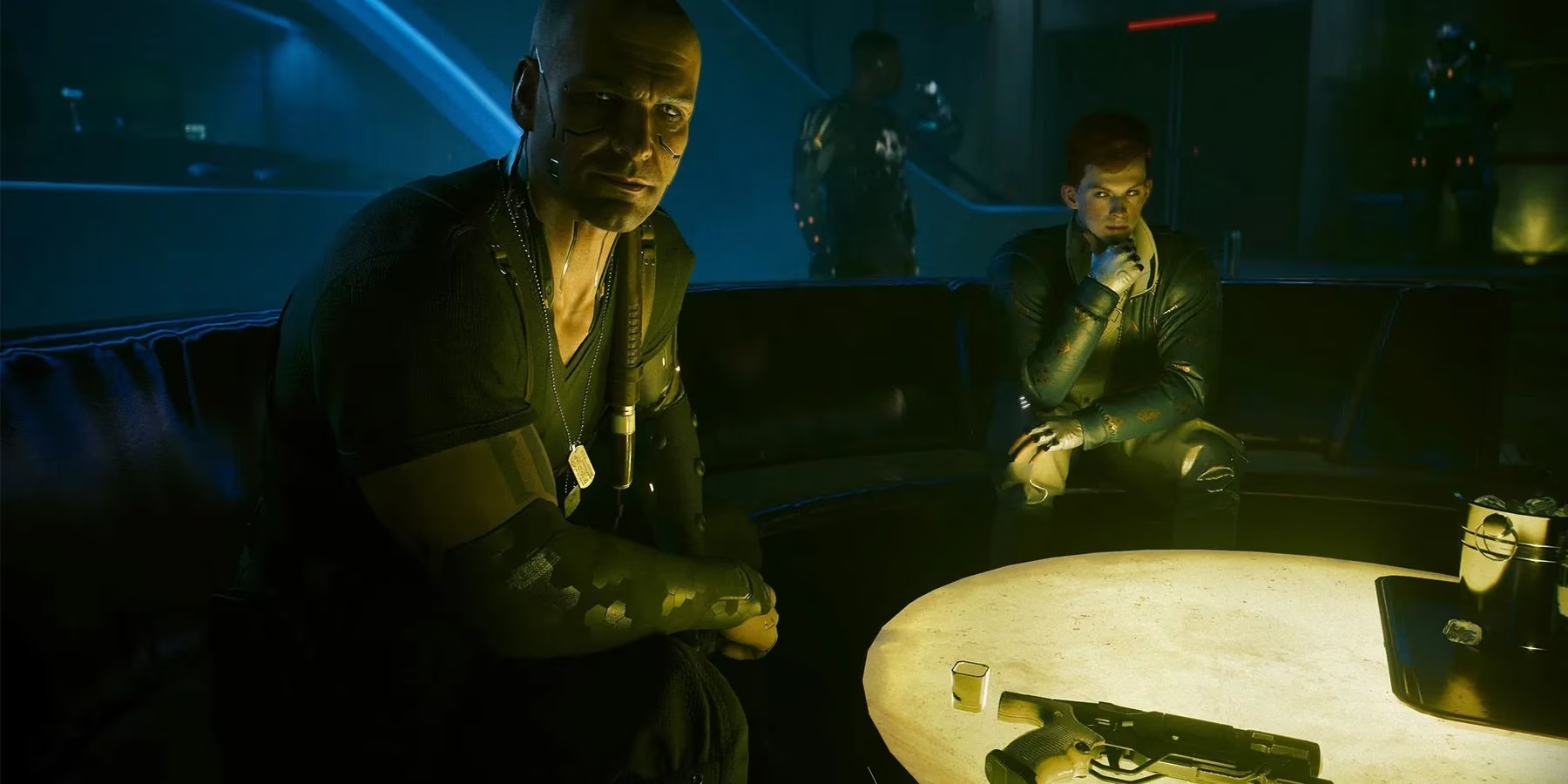
Picture this: It's 2069, and President Myers, fresh-faced and full of that dangerous combination of ambition and idealism, decides the Free States need a little more "unity." She tells herself it's for their own good—everyone would benefit from NUSA resources, from a single currency, from not having to watch supply convoys get hijacked by Nomad clans every other Tuesday. But the Free States? They've tasted independence, and they like the flavor. What starts as political posturing spirals into firefights across the Californian border, and suddenly Night City finds itself the juicy prize stuck between North and South California's grinding teeth. The city tries to stay neutral. Yeah, right. Like a corpo in a shootout trying to stay "uninvolved." Before long, Night City's streets become the front line, and the aftermath carves out Dogtown—a district so wrecked that even the NCPD wrote it off as a bad check.
Now, let's be real: the Unification War lasted barely a year, from 2069 to the Treaty of Unification in June 2070. But that year? It packed more drama than a full season of Watson Whore. This wasn't just a minor footnote; it reshaped the entire power grid. It gave Night City its fragile independence, turned Militech into the giant we know, and set the stage for every desperate gig V ever ran. And yet, players have only ever heard about it through the static of radio broadcasts and the bitter mutterings of veterans propping up bars in Japantown. That's like being told about a legendary concert but only getting to listen through a tin can.
CD Projekt Red knows this. They're already deep into Project Orion, the next big swing at the Cyberpunk universe. Details are as scarce as an honest cop, but the studio has made it clear they're not done with Night City. The lore buffs, the shard scavengers, the people who read every terminal entry—they're hungry. And what better way to feed that hunger than by stepping backward? A prequel set during the Unification War wouldn't just be a nostalgia trip; it would let players live the chaos that forged the world they've spent hundreds of hours surviving. Imagine fighting alongside the NUSA or the Free States, seeing Night City's iconic districts before they got their neon paint job, maybe even crossing paths with a younger Saburo Arasaka manipulating the conflict from the shadows. The storytelling potential is off the charts.
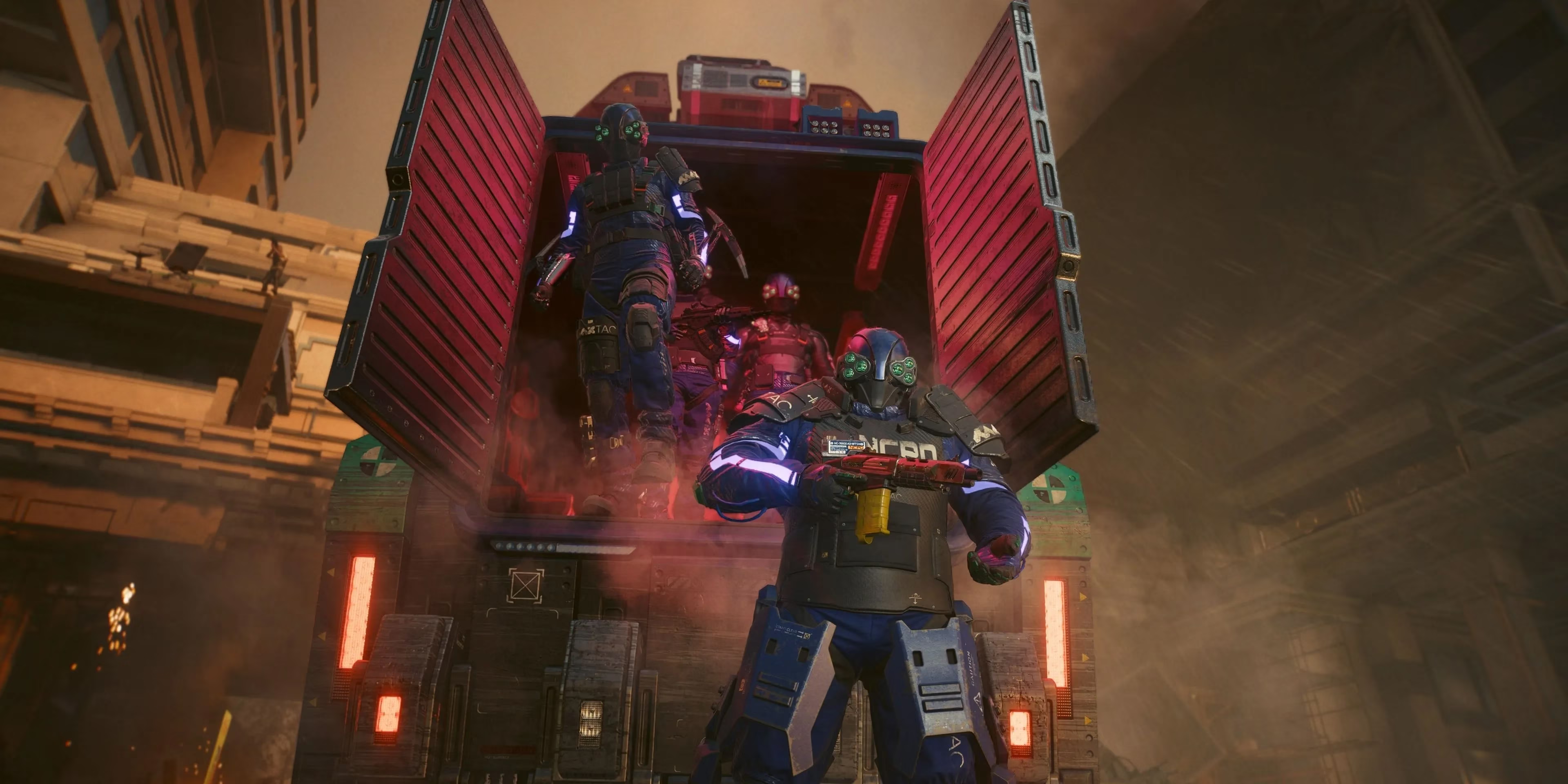
And here's the beautiful part: it wouldn't even need to be a full-blown sequel. The studio has already shown they can tell tight, powerful stories in smaller packages—Thronebreaker shook up The Witcher's formula, and Phantom Liberty itself felt like a whole game crammed into one district. A standalone expansion, a focused RPG campaign, even an animated series in the vein of Edgerunners could do the Unification War justice. Just picture a six-episode arc where we follow a squad of soldiers stuck in the meat grinder, each episode from a different perspective, each one peeling back another layer of futility. The franchise has the blueprint; it just needs to sharpen the pencil.
What makes the Unification War particularly tempting is how little we actually know about it. Sure, we've got the broad strokes—Myers' proposal, the resistance, Dogtown's birth. But the day-to-day? The underground deals? The moment a young fixer realized they could cash in on the chaos? That's all blank space, and blank space is a writer's best friend. It gives developers the freedom to create new characters without stepping on the toes of V's legend. Maybe the player character is a disillusioned Militech grunt, or a Nomad who got swept into the mess, or a media trying to document the truth before someone puts a bullet in their brain. The possibilities are as endless as the megabuilding elevators.
Of course, the world of Cyberpunk has plenty of other wars to mine. The Corporate Wars, the Central American conflicts, the DataKrash aftermath—there's a whole buffet of misery to choose from. But the Unification War feels personal. It's the event that directly shaped the Night City players know, the one that made Myers a president who shakes your hand while her eyes calculate your usefulness. If Project Orion wants to remind everyone why this universe is special, it could do a lot worse than sending us back to where the wounds were still fresh. And who knows? Maybe in 2027, we'll get an announcement that makes us say, "Finally, someone gave that war its due." Until then, we'll keep scanning those loading screens, piecing together a story that's just begging to be played.