
Why Cyberpunk 2077 Never Received New Game Plus Mode
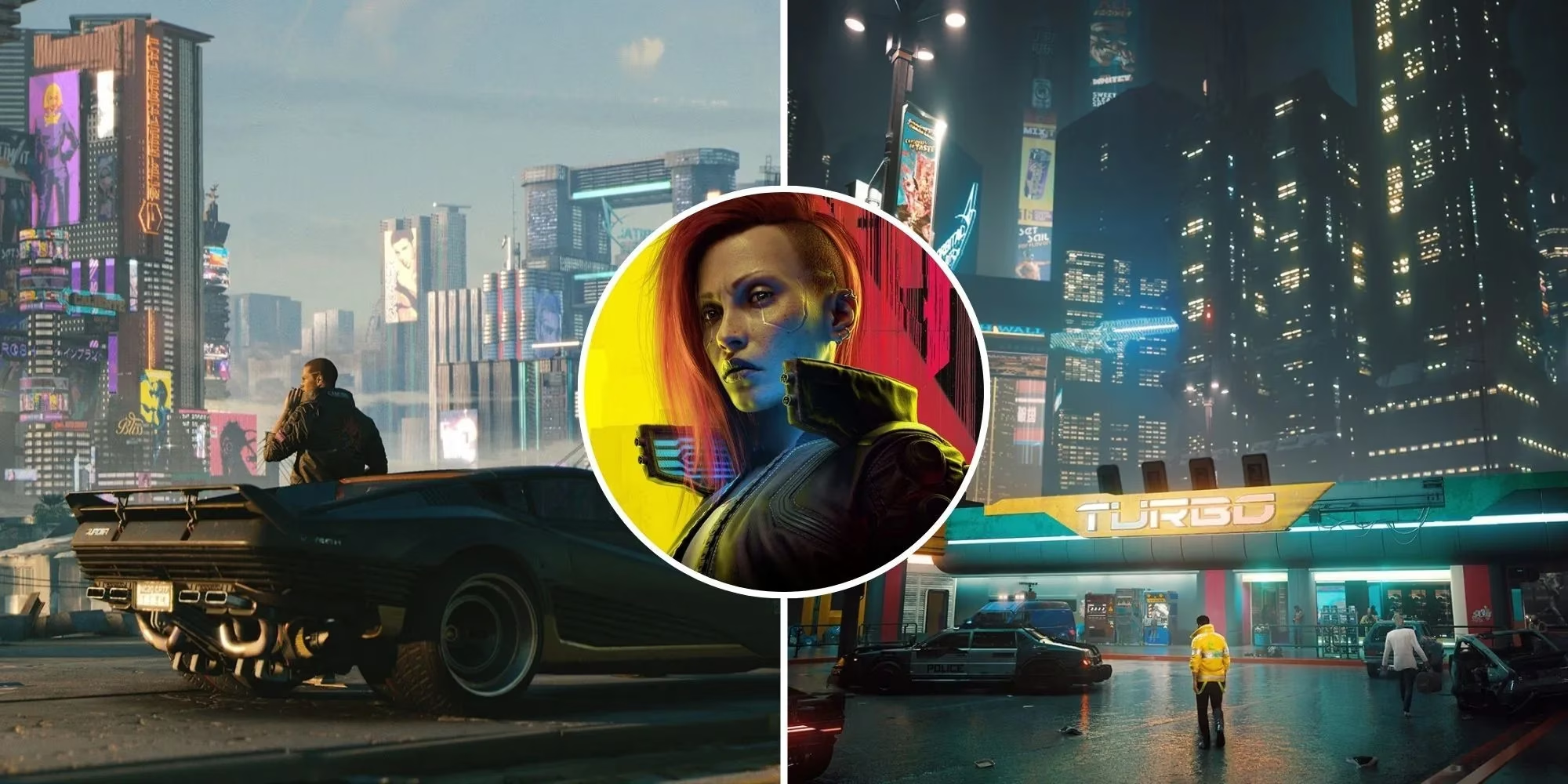
Cyberpunk 2077 stands as one of the most replayable RPGs in recent gaming history, featuring multiple romance options, distinct life paths, diverse dialogue choices, and countless build variations. With such extensive replayability elements, why has this critically acclaimed game never implemented a New Game Plus mode? The answer lies in the fundamental design philosophy behind Night City's creation.
According to Pawel Sasko, Cyberpunk 2077's lead quest designer and associate game director, the absence of New Game Plus stems from the game's very construction. "For us, it's really important that when you have components in a game, they all work together and they all work well and they all make sense," Sasko explained during an exclusive interview. The developer emphasized that Cyberpunk 2077's specific narrative structure makes New Game Plus integration particularly challenging.
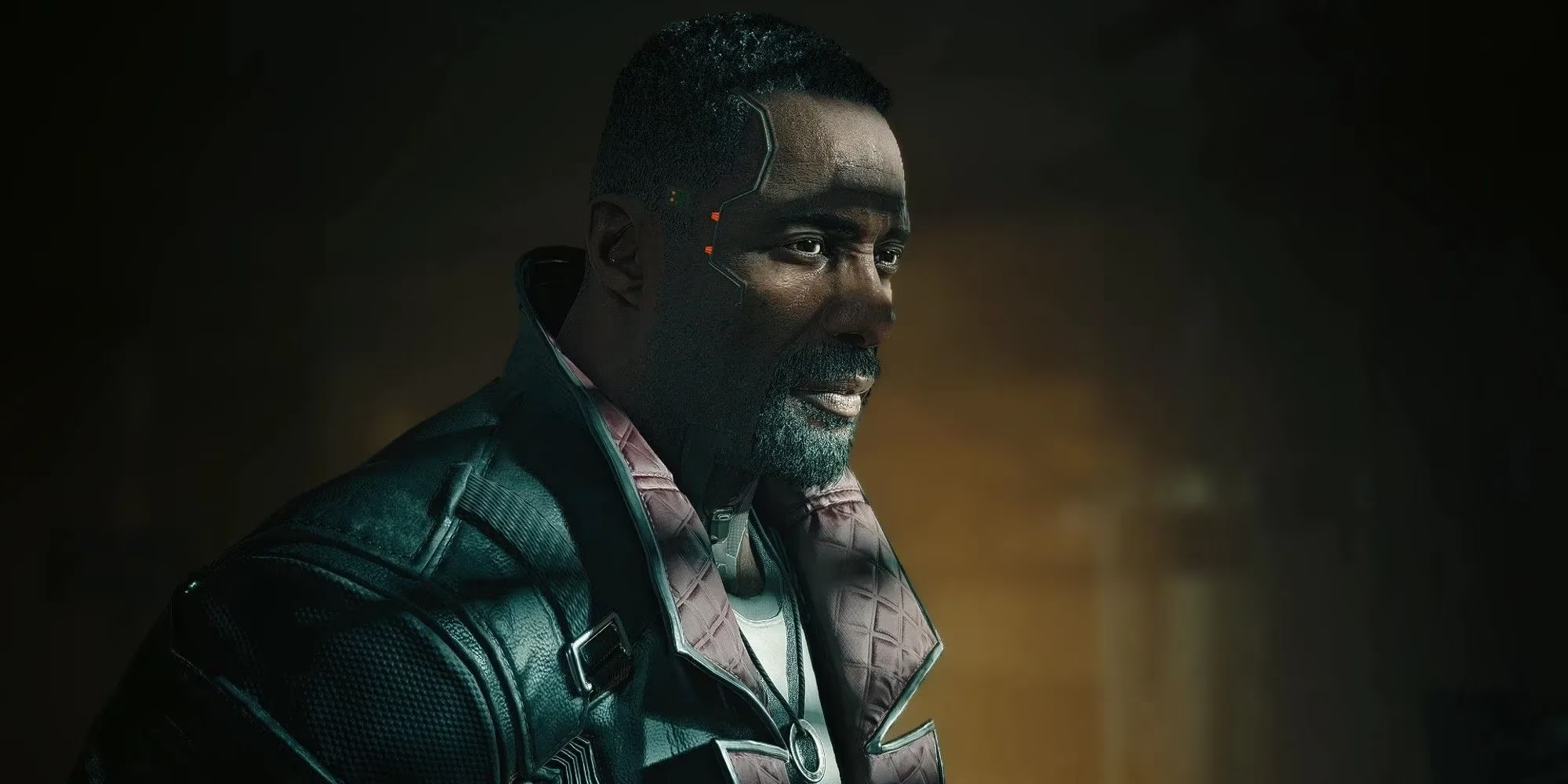
The game's progression follows a carefully crafted narrative arc that begins with "becoming a legend" during the prologue, then shifts to dealing with terminal illness throughout the main story. This specific construction creates inherent conflicts with traditional New Game Plus implementation. "It's incredibly difficult to figure out a way where New Game Plus could be done in a way that doesn't completely break the way the game is constructed," Sasko revealed.
The Narrative Integrity Challenge
Unlike other RPGs that successfully incorporate New Game Plus, such as Starfield which Sasko praised for implementing the mode "really well," Cyberpunk 2077's storytelling approach presents unique obstacles. The game's central narrative involving V's deteriorating condition and race against time doesn't naturally accommodate starting over with accumulated gear and abilities.
How would a New Game Plus mode handle the narrative reset while maintaining character progression? This fundamental question highlights the core issue CD Projekt Red faced. The developers prioritized maintaining narrative coherence over adding features that might compromise the story's impact.
Designed for Organic Replayability
Sasko emphasized that Cyberpunk 2077 was "designed to be replayed" through its inherent variety rather than through artificial progression systems. The game encourages multiple playthroughs by offering:
-
Three distinct life paths (Nomad, Street Kid, Corpo) with unique opening sequences and dialogue options
-
Multiple romance options with different characters across gender preferences
-
Diverse character builds focusing on hacking, combat, or stealth approaches
-
Branching story decisions that significantly alter outcomes and relationships
"There's so many things that you can at least, twice or three times, have a very varied experience in 2077," Sasko noted. This organic approach to replayability reduces the necessity for a traditional New Game Plus mode.
Technical vs. Narrative Considerations
While the development team acknowledged they could "figure out the design solutions that would help out with everything connected to mechanics and gameplay"—aspects Sasko described as "math and design"—the narrative considerations proved more significant. The emotional weight of V's journey and the game's carefully paced progression system created barriers that technical solutions couldn't overcome without compromising the experience.
Ultimately, the decision came down to preserving what makes Cyberpunk 2077 unique rather than implementing a feature that might feel "tacked on" if done incorrectly. This commitment to quality over quantity demonstrates CD Projekt Red's dedication to maintaining the integrity of their vision for Night City and its inhabitants.