
In the neon-drenched labyrinth of Night City, every dropped weapon is a whisper from a path not taken. The city’s fractured narratives are stitched together by choices, and sometimes those choices leave behind ghosts—iconic firearms that slipped through V’s fingers like grains of irradiated sand. For years since the game’s launch, players learned to live with the ache of a missed collectible, that hollow space in the arsenal where a legendary piece should gleam. It was a permanent wound, a locked room in memory’s stash. But with the Phantom Liberty expansion, a peculiar crack has opened in the fabric of consequence. There now exists a mechanical Raven, a chrome-plated ferryman who deals in second chances.
This is the tale of Herold, a black-market arms dealer who transforms Dogtown’s grimy underbelly into a treasury of redemption. Miss no more the weapons that once vanished into the code’s deeper currents. Herold’s stall is not merely a shop—it is a salvage yard for unlived moments, a place where fate’s discards are polished and priced.
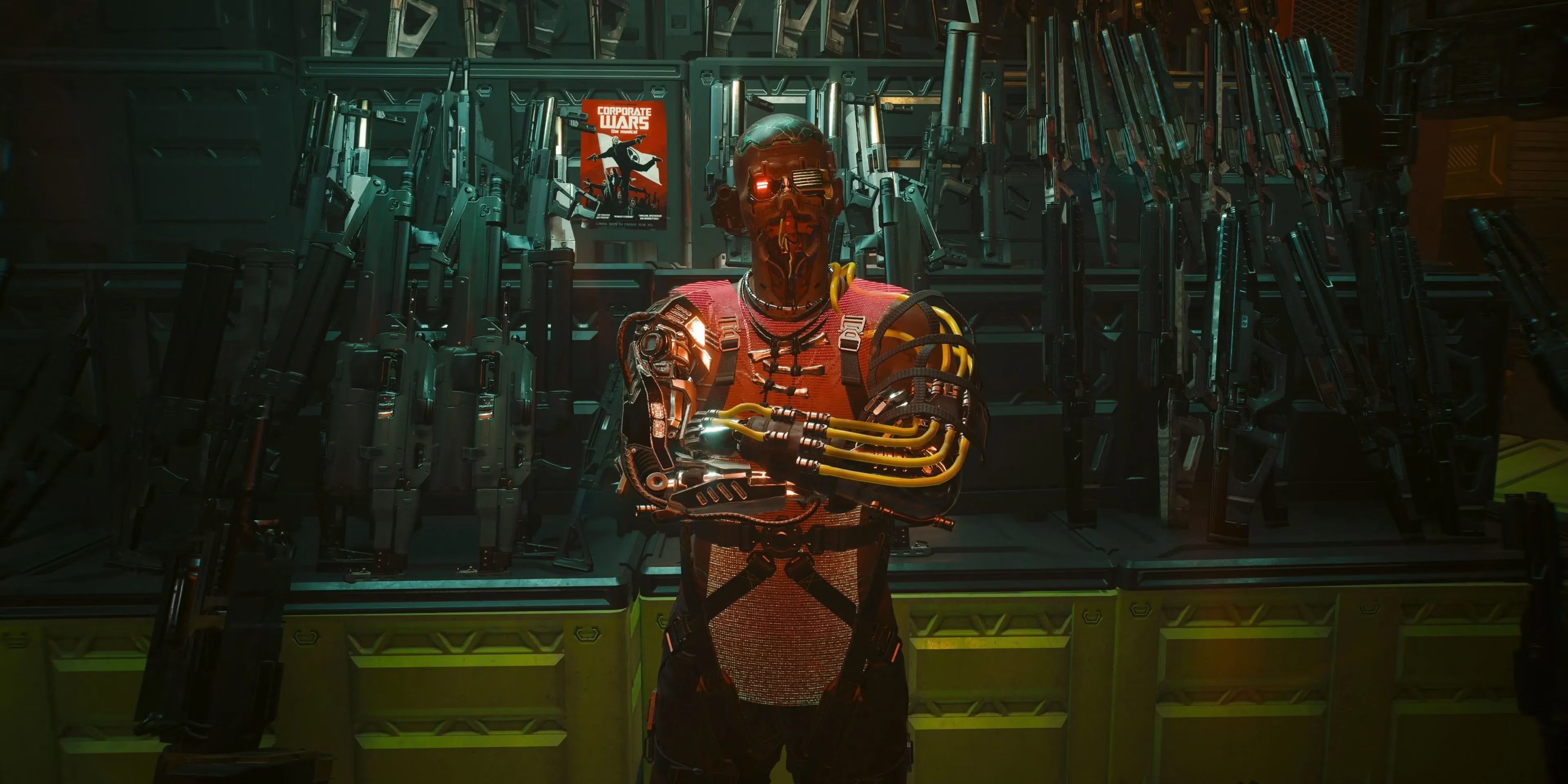
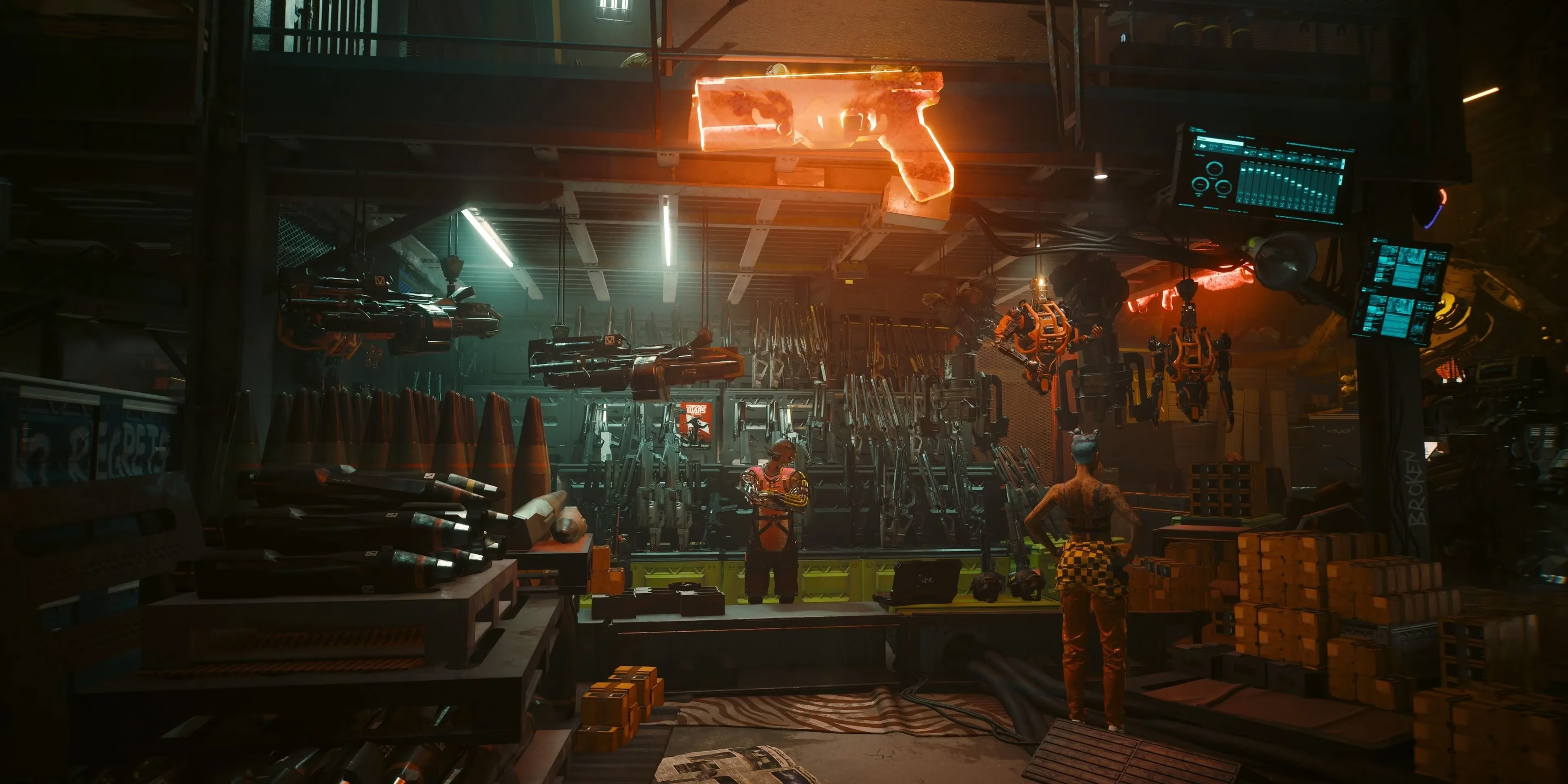
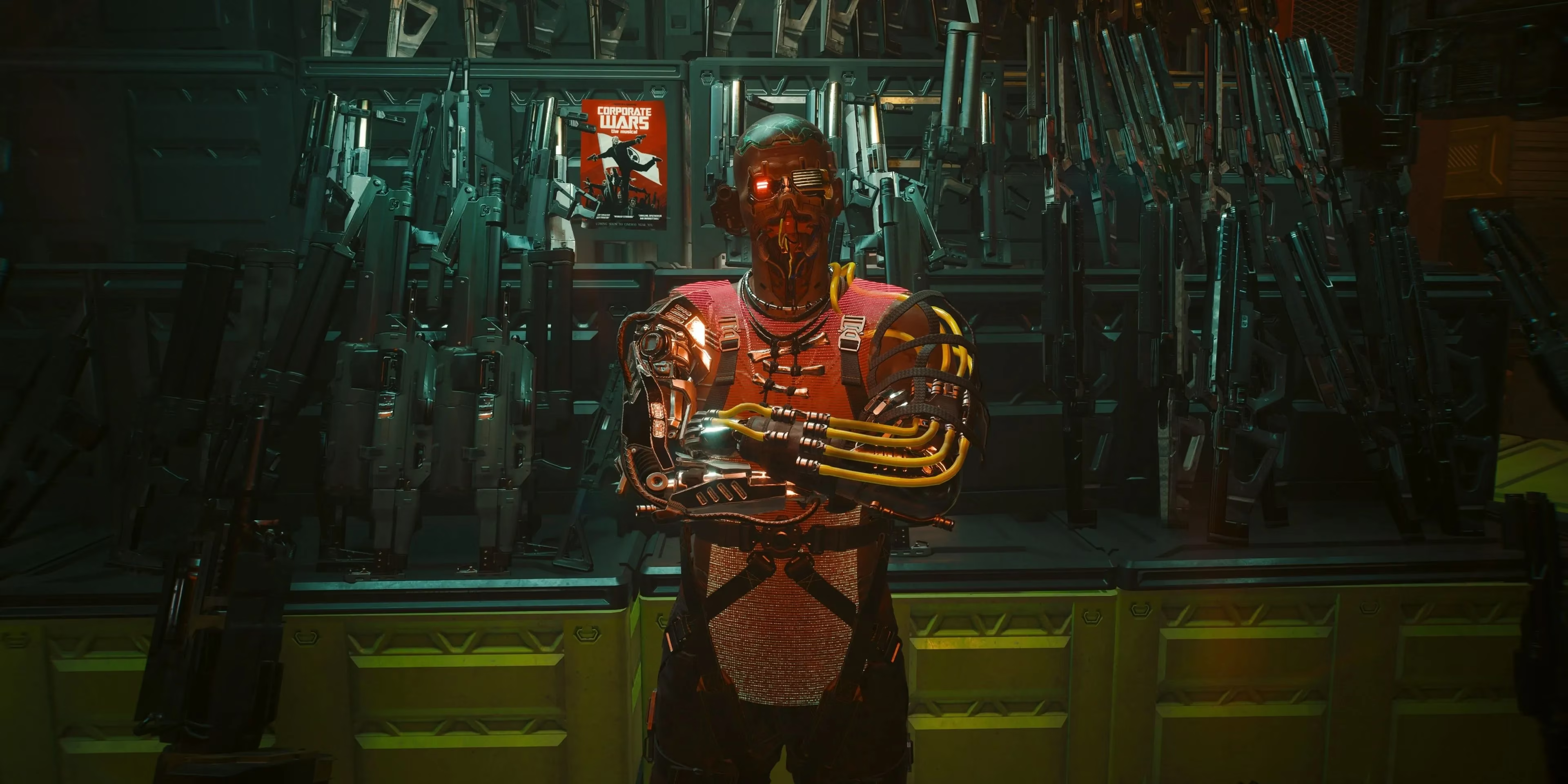
The journey to this peculiar salvation begins the moment V breaches the walls of Dogtown. After that first illicit entry, the EBM Petrochem Stadium rises from the dust like a rusted coliseum of commerce. Fast-travel there, and let the cacophony of black-market dealings fill the senses. The Stadium is Dogtown’s beating, corrupted heart—a bazaar where shadows trade in hope and firepower. Among the vendors peddling augments and secrets, one figure stands out: Herold. He is less a man and more a walking armory. His body is a cathedral of chrome; a flamethrower attachment sprouts from his arm like a sleeping dragon’s breath. He is the city’s own prosthetic memory, built to hold what you left behind.
To approach Herold is to enter a pact with the past. His glass cases hold not just guns, but echoes of encounters—the silenced muzzle of an opportunity, the digital ghost of an unlooted corpse. Each weapon in his inventory corresponds to a specific failure: a mission completed without scrounging through the wreckage, a foe slain in haste before their piece could be claimed. Herold’s stock materializes only from V’s own timeline. This is the crucial alchemy. He does not sell every iconic weapon in Cyberpunk 2077; his wares are forged from the broken links of your personal narrative.
The rule is as elegant as it is unforgiving: you must have unlocked the iconic weapon, but failed to collect it. Consider the doomed Dum-Dum. If, in Act One, V let the Maelstromer breathe, his legendary Doom-Doom revolver remains chained to a living soul. Herold cannot conjure it from the void. But if the bullet found its mark and yet the gun was left to cool beside the corpse, then it might appear on Herold’s shelves. This mechanic turns missed loot into a premium commodity, a second-hand destiny available at extortionate rates. Prices soar beyond 20,000 Eurodollars with the casual arrogance of a corpo exec, and some pieces demand over a hundred thousand eddies—enough to purchase a modest life outside the city. Herold is no philanthropist; he is a surgical scalpel extracting the cost of regret.
For the completionist willing to pay, the Stadium becomes a high-stakes pawnshop of possibilities. The interface is simple: browse the rotating selection, check the number next to each name, and feel the weight of past haste. But which weapons justify the sacrifice of one’s financial future? That depends on build and nostalgia. The crowd-controlling Yinglong smart submachine gun or the tech-piercing Comrade’s Hammer might tempt a netrunner-turned-gunslinger. The elusive Satori katana, once left in the Arasaka penthouse’s orbital quiet, could complete a blade dancer’s collection. The true value lies not in raw stats, but in the closure they provide—a final puzzle piece slotted into a fractured picture.
Herold’s existence rewires the very philosophy of looting in Night City. The fear of misplacing an iconic weapon has softened like chrome melting under a thermal blast. Players can now explore with a touch more recklessness, knowing that the black market stands as a safety net woven from dog-eared currency. Yet it is a threadbare net at best; missing a weapon because the narrative trigger was never pulled leaves no trace in Herold’s database. This nuance ensures the choice-consequence skeleton remains intact. You cannot resurrect the dead to buy their armaments. You can only reclaim what was already yours by right of conflict.
To amass the required fortune, one must dance with Night City’s economic demons. Crafting and selling high-tier smart weapons, completing fixer gigs in Dogtown’s perilous sectors, and looting every access point for quickhack materials become essential rituals. The financial grind transforms into a pilgrimage, a penance paid in scratchcards and scavenged circuits. When the moment finally comes to purchase that long-lost piece, the transaction feels less like a sale and more like an exorcism—a spectral weight lifted from the inventory screens.
Ultimately, Herold the Black Market Vendor is a gift wrapped in razor wire. He offers a unique repair to the broken collector’s instinct, yet demands a tribute that would make Hanako Arasaka blush. As Cyberpunk 2077 continues to evolve into its 2026 form, this feature stands as a testament to CD Projekt Red’s understanding of player sorrow. The missing iconic is no longer a permanent scar; it is a debt that can be settled, an old melody that can be replayed for a fee. In the ever-churning chaos of Night City, even regret is subject to the laws of supply and demand.