
I remember the first time I booted up Cyberpunk 2077 back in late 2020. The neon-drenched streets of Night City were stunning, but something felt off. The world was vast yet hollow, the RPG systems half-baked, and the story – while compelling at its core – never quite found its rhythm. Fast forward to 2026, and I’m still playing. The difference? Phantom Liberty and the massive 2.0 overhaul that arrived with it. After more than three years of patches and this game-changing expansion, Cyberpunk 2077 has finally become the revolutionary experience CD Projekt RED promised so long ago. It’s not just better – it’s transformative, and every system feels like it was rebuilt from the ground up to finally give players the freedom and depth they deserved.
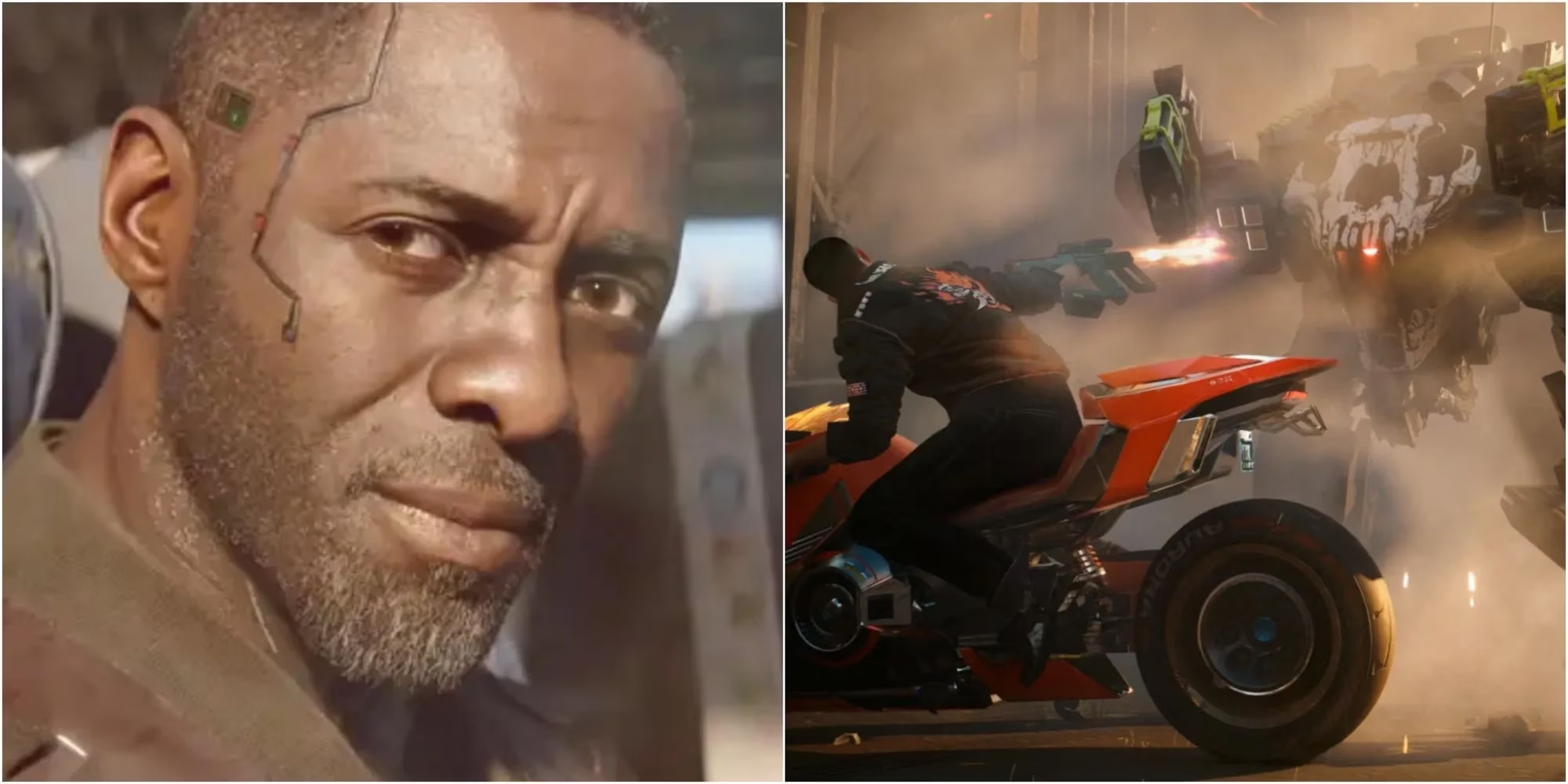
The original side quests in Cyberpunk 2077 were a mixed bag. For every brilliantly written gig that delved into transhumanist dread or corporate corruption, there were half a dozen forgettable fetch quests that felt like padding. I’d find myself slogging through bandit camps just to get to the next piece of meaningful content. Phantom Liberty completely flips this script. Every single side job in Dogtown is a tightly scripted, morally gray vignette that forces hard choices. Do I sell out a desperate informant for quick eddies, or risk my hide to help her disappear? The gigs here don’t just add context – they are the context, weaving a dense tapestry of life in this walled-off district. The writing has that same sharpness I adored in The Witcher 3, and it never lets up. No more filler. In 2026, I still stumble across details I missed on my first three playthroughs, and that’s a testament to how layered Phantom Liberty’s quest design really is.
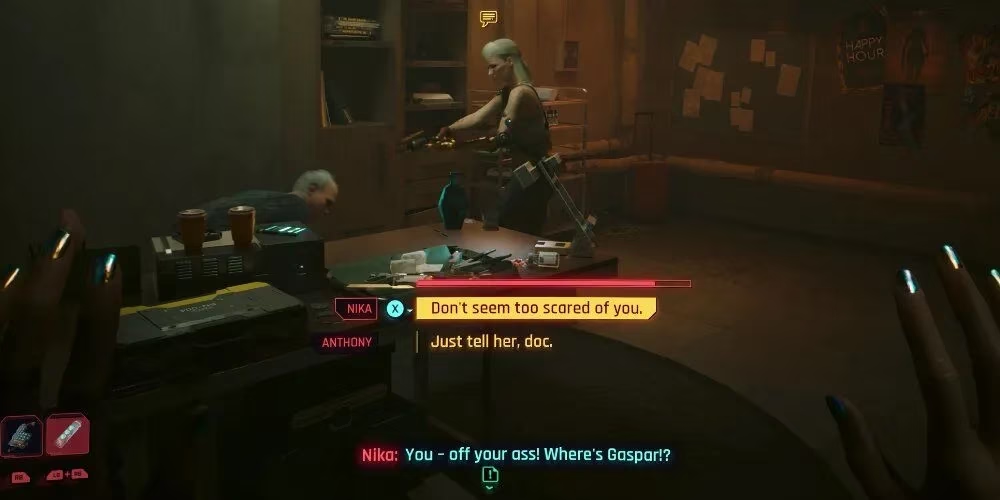
The main narrative was always the beating heart of Cyberpunk 2077. V’s desperate struggle against a ticking clock, Johnny Silverhand’s rebellious ghost hijacking their mind – it was gripping material. But the base game had a pacing problem. The looming threat of imminent death never translated into gameplay urgency; I could spend weeks of in-game time doing side activities while the biochip supposedly fried my brain. Phantom Liberty fixes that with a taut spy thriller that wastes no time. Idris Elba’s Solomon Reed anchors the plot with a quiet intensity that rivals Keanu Reeves’ iconic performance. The stakes are immediate and personal, with decisions that branch in genuinely shocking directions. I’ve witnessed endings so bleak they left me staring at the credits in silence. This is the kind of reactive storytelling I wanted from the start, where my choices don’t just change a line of dialogue but redefine entire character arcs and the fate of a city in turmoil.
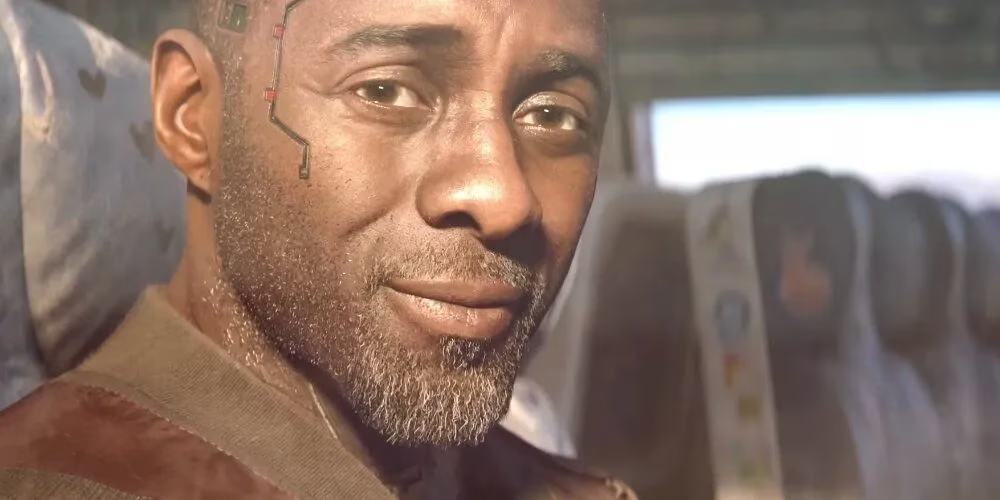
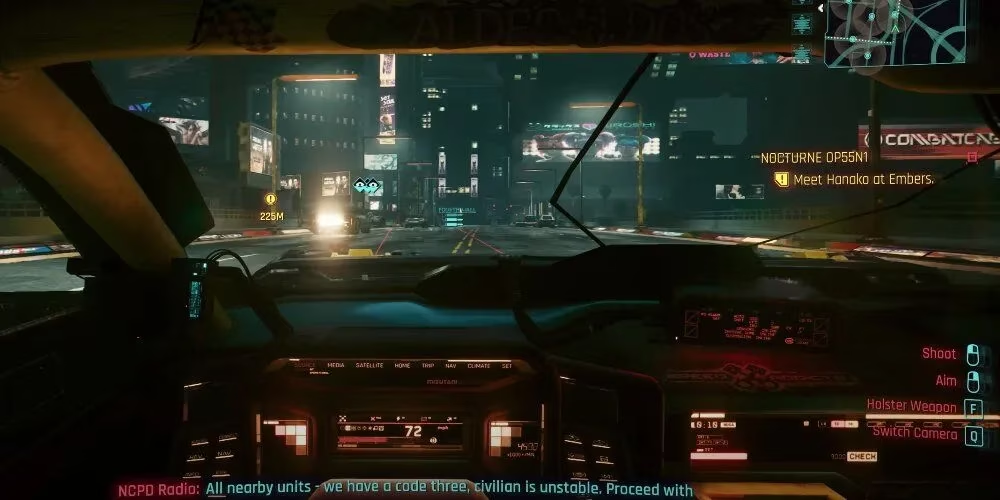
Before 2.0, driving was fun but functionally hollow. I could race through Night City’s neon canyons, but any real confrontation stayed on foot. Now, vehicle combat is fully integrated – and it’s absolute chaos in the best way. I lean out the window of my Mizutani Shion, smart pistol blazing, forcing a gang vehicle to swerve into a crowded market stall. Motorcycle chases turn into frantic running gunfights; I can even hack enemy cars to slam on their brakes. The new system dovetails perfectly with the police rework. Commit a crime, and Blue Boys escalate quickly. If I push too far, MaxTac descends – a relentless miniboss squad that genuinely terrifies me. These additions make the city feel reactive and alive, something I only truly appreciated after dozens of hours in 2026. High-speed pursuits through Dogtown’s open boulevards are now a highlight, not an afterthought.
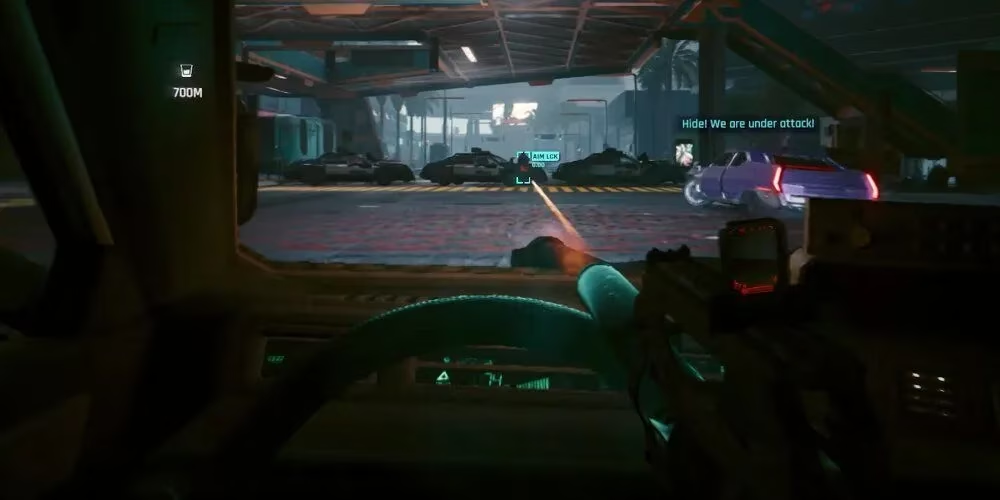
Dogtown itself is a revelation. Night City is gorgeous, but after hundreds of hours, its glass-and-chrome aesthetic can blur together. The walled sub-district of Dogtown feels like a festering wound: crumbling residential blocks, torn-down barricades, and desperate faces everywhere. There’s a sense of history here, of a community abandoned by the powers that be. The layout is more open, encouraging vehicular exploration without constant pedestrian dodging. I’ve spent entire evenings just cruising its dusty streets, finding hidden stash rooms and listening to radio broadcasts about Kurt Hansen’s Barghest militia. It’s a masterclass in environmental storytelling, and in 2026, it remains the most atmospheric corner of the entire Cyberpunk map.
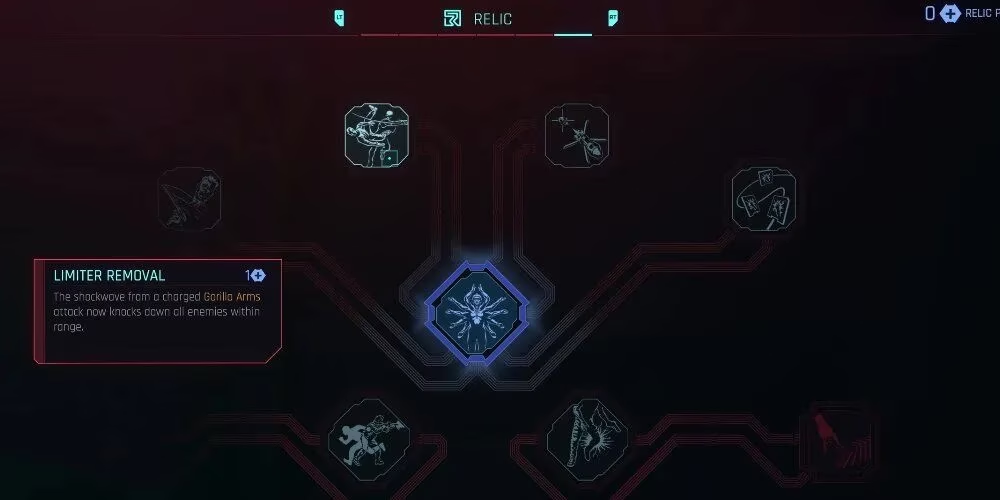
The Relic skill tree is the final piece that transforms combat from good to extraordinary. Early on, Songbird unlocks nine new abilities that let me reshape V into an absolute force. Emergency Cloaking turns me invisible mid-fight, letting me reposition for devastating takedowns. Jailbreak supercharges my Mantis Blades, letting me leap from enemy to enemy like a chrome-plated demon. I’ve built entire playstyles around Vulnerability Analytics, which marks weak points for bonus damage, or Spatial Mapping, which turns grenade spam into a tactical art form. Combined with the overhauled standard perk system, character building now feels limitless. In 2026, the community around Cyberpunk 2077 is still discovering absurdly overpowered hybrids, and that ongoing experimentation is what keeps me coming back.
The Cyberpunk 2077 I’m playing today is a different game from the one that launched. Phantom Liberty didn’t just add content – it redefined what the base game could be, sharpening every strength and filing down almost every flaw. The gigs are meaningful, the main story is lean and impactful, vehicle combat makes the open world feel dangerous, Dogtown breathes with lived-in character, and the Relic skills hand me the keys to truly creative builds. As I write this in 2026, with over 400 hours under my belt, I can finally say without reservation: this is the cyberpunk RPG I was promised. Better late than never, it’s a neon-drenched masterpiece.