
Stepping back into Night City in October 2023 felt like returning to a familiar dystopian dream, but Phantom Liberty immediately wove a new thread of tension into my mercenary life. I didn\u2019t expect the DLC to feel so personal\u2014or so willing to kill people I\u2019d grown attached to. V, the character I\u2019d guided through neon-drenched chaos, became a bystander to a conspiracy born in the Unification War, and every alliance felt like balancing on a blade\u2019s edge. The deaths that followed weren\u2019t scattered anonymous NPCs; they were blunt, intentional, and carved deep into the narrative.
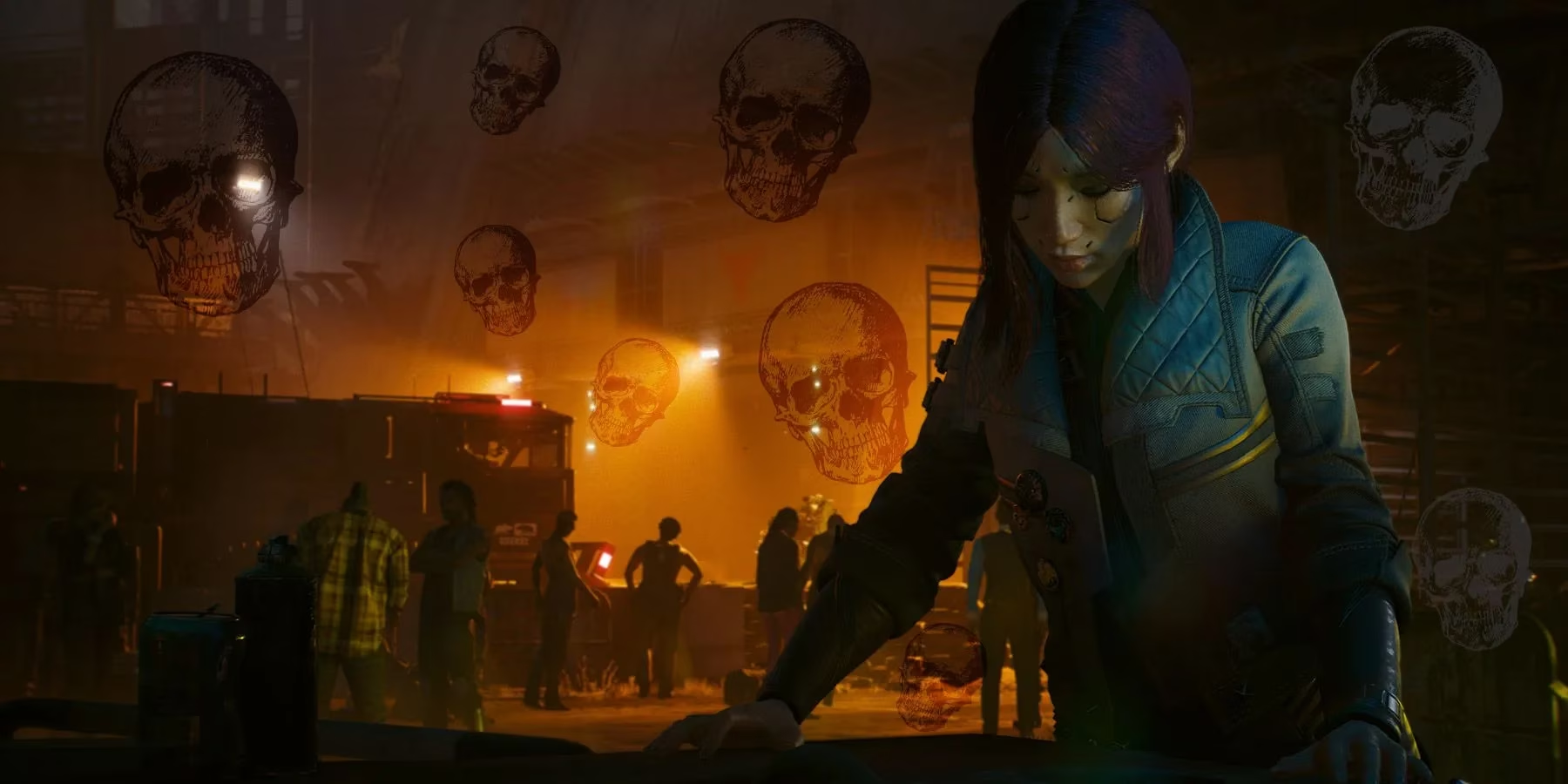
From the start, I knew this expansion would shift its tone. It wasn\u2019t the same anti-corporate scream of the base game; it was a spy thriller soaked in betrayal, and I felt like a moth that had wandered into a web of lasers\u2014one wrong move and everything would collapse. The cast was smaller, more intimate, and paradoxically, that made every loss hit harder. I still remember Slider, a netrunner who helped me reconnect with Songbird across the corrupted arteries of the Blackwall. His sudden collapse was like watching a candle gutted by a sudden gust\u2014a scream, a flash of pain, and then nothing but the silent hum of deadly AI. He was compromised by Blackwall entities, his mind devoured while he was still tethered to the firewall. The metaphor that stuck with me was a deep-sea diver\u2019s air hose being sliced at the abyss; one moment he was there, the next the crushing pressure of rogue algorithms erased him entirely.
The real crucible, though, was the choice between Songbird and Reed. By the time I reached that fork, I had lived in their worlds long enough to feel the weight of both panicked hope and grim duty. Songbird, So Mi, was a ghost in the machine\u2014a woman fleeing a cage built from her own government, her body a leaking vessel of Blackwall corruption. And Reed, the stoic agent, was a compass that always pointed home, even if home was a graveyard of broken promises. The game forced my hand, and I still feel the tremor.
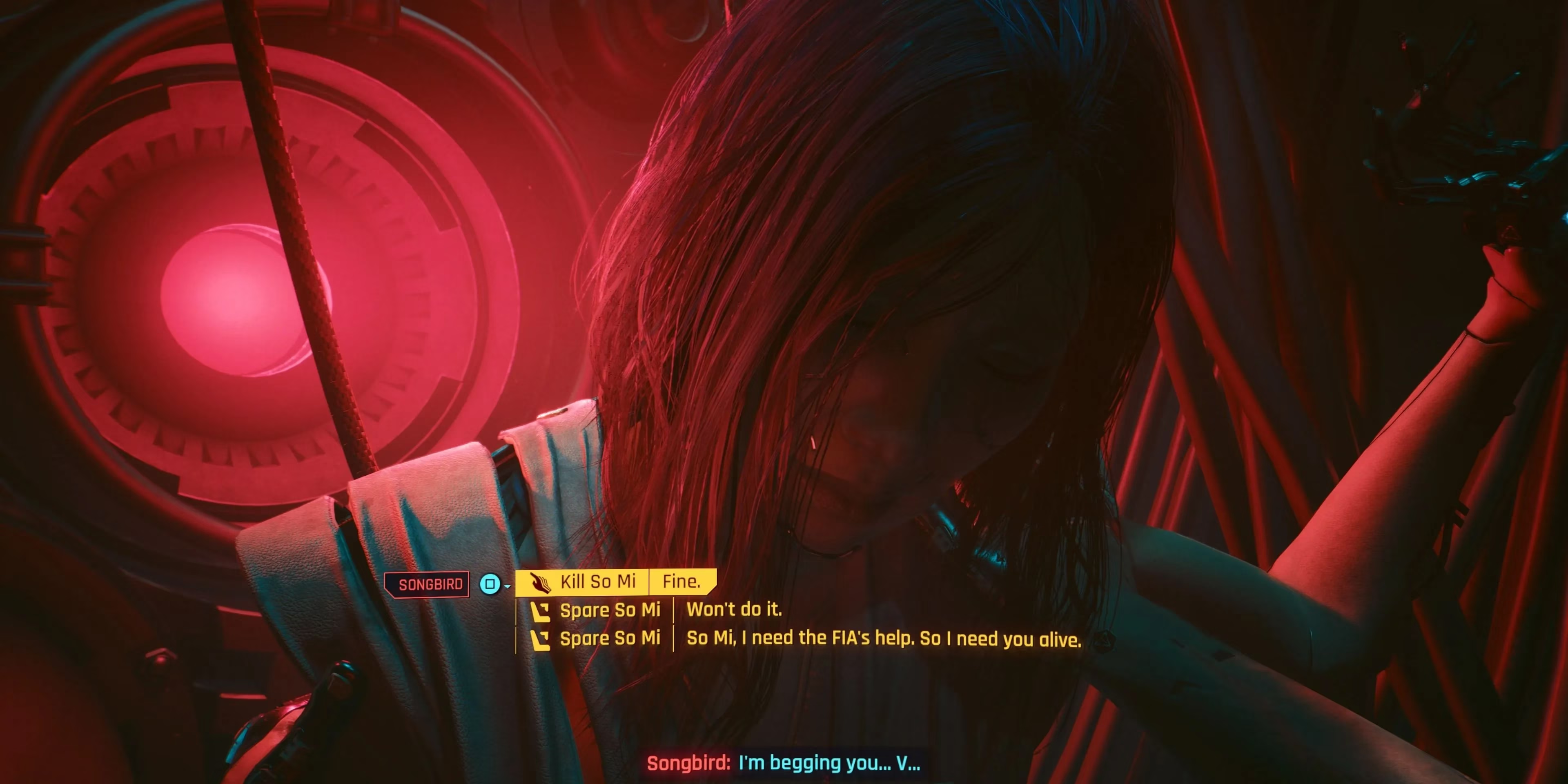
If I sided with Reed, I had to chase Songbird through the labyrinthine Cynosure facility, a crumbling cathedral of old-world tech where shadows dripped like oil. At the end, So Mi begged for death\u2014she said she was fading, and the only peaceful exit was a bullet. I honored her request, tears blurring the HUD, and then Kurt Hansen stood in my path. He became a grotesque boss fight, his augments screeching like a dying orchestra. I killed him, and Reed thanked me with a voice heavy as wet concrete: \u201cThat was for Alex.\u201d By then Alex was already dead, her deal with Kurt gone wrong because Songbird\u2019s rogue power had turned the tables. In that timeline, Alex became a footnote\u2014a painting on a wall that I barely had time to mourn before the next tragedy demanded my attention. Her death felt like a champagne flute shattering at a toast; elegant, sudden, and leaving nothing but sharp edges.
On the other path, when I sided with Songbird, I carried her body through the facility like a sacred burden. The tunnels dripped with the cold sweat of surveillance drones, and I knew Reed was closing in. When he finally blocked my escape, his request was quiet: hand So Mi over. But I couldn\u2019t. I pulled my weapon, and the fight was a slow-motion crash of ideals. Shooting Reed felt like slicing through a tether I\u2019d been clinging to\u2014the man was a monument to loyalty, and I reduced him to silence. His death wasn\u2019t explosive; it was a bass note that kept humming long after the screen went dark. Each of these endings turned my stomach, but that\u2019s the genius of Phantom Liberty: the pain is the point.
Compared to the base game\u2019s sprawling body count, the DLC\u2019s deaths are surgical. In the main campaign, loss often arrived in a hail of gunfire from a gang I barely remembered insulting. Here, every name on the list was someone I had shared a drink with, argued with, or trusted. Slider\u2019s scream, Alex\u2019s switchblade twist, Kurt\u2019s metallic gurgle, Songbird\u2019s plea, Reed\u2019s final breath\u2014they all left fingerprints on my memory. The scarcity of death only magnified its impact. It\u2019s like comparing a city-wide blackout to a single, intimate candle being extinguished in a dark room; the latter lingers far longer.
I eventually discovered there\u2019s an ending where both Songbird and Reed survive, and that knowledge gave me a strange sense of relief\u2014even if I didn\u2019t experience it on my first run. Knowing that a path exists where V\u2019s companions live adds a layer of hope, a reminder that every web has a safe strand if you\u2019re willing to search for it. Still, the deaths I witnessed have stayed with me through 2026, long after I put the controller down. They\u2019ve become part of my own cyberpunk mythology, proof that in a world of chrome and code, human connection is both the most fragile and the most powerful thing we have.
Cyberpunk 2077: Phantom Liberty is available now on PC, PS5, and Xbox Series X/S, and even three years later, its story continues to resonate with anyone willing to face the darkness of choice.