
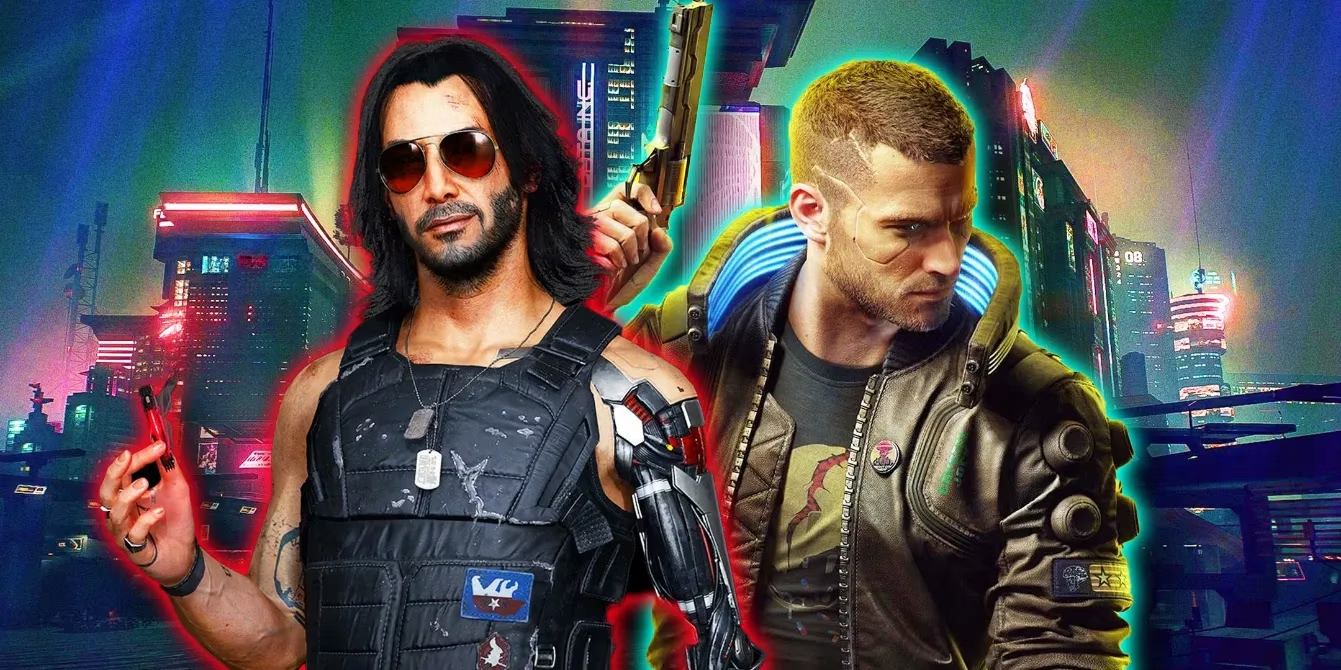
From my perspective as a dedicated edgerunner, the story of Cyberpunk 2077 is one of the most incredible turnarounds I've ever witnessed in this digital playground we call gaming. I remember the initial launch back in 2020—oh boy, what a mess that was. Bugs, performance issues that made my rig scream for mercy, and promises that felt like they belonged in another dimension. But CD Projekt Red, bless their stubborn souls, stuck with it. They didn't just patch the holes; they rebuilt the damn ship while it was still sailing. Redesigning the entire progression system? That's no small feat. It was like watching a ripperdoc perform open-heart surgery on a living patient, and somehow, miraculously, it worked. And let's be real, the arrival of Cyberpunk: Edgerunners was like a supercharged adrenaline injector straight to the heart of the community. Suddenly, Night City felt more alive than ever, especially when I could finally snag David Martinez’s iconic jacket for my own V. Talk about a vibe.
Now, as we look toward 2026 and beyond, all eyes are on the horizon for Project Orion, the sequel. But here's the thing that's got me and my chooms talking lately—a sense of déjà vu that's as unsettling as a glitched-out braindance. I saw a recent job listing from CDPR looking for a Lead Encounter Designer. One of their big goals? "To create the most realistic and reactive crowd system in any game to date." I read that, and my internal threat detector started pinging. Not gonna lie, it sent a shiver down my cyber-spine. Because, man, that language... it sounds awfully familiar. It echoes those grand, sweeping promises we heard all those years ago before the original game dropped. Ambition is the engine of Night City, but sometimes, that engine can overheat and blow a gasket if you're not careful.
Why This Ambition Feels Like a Ghost from the Past
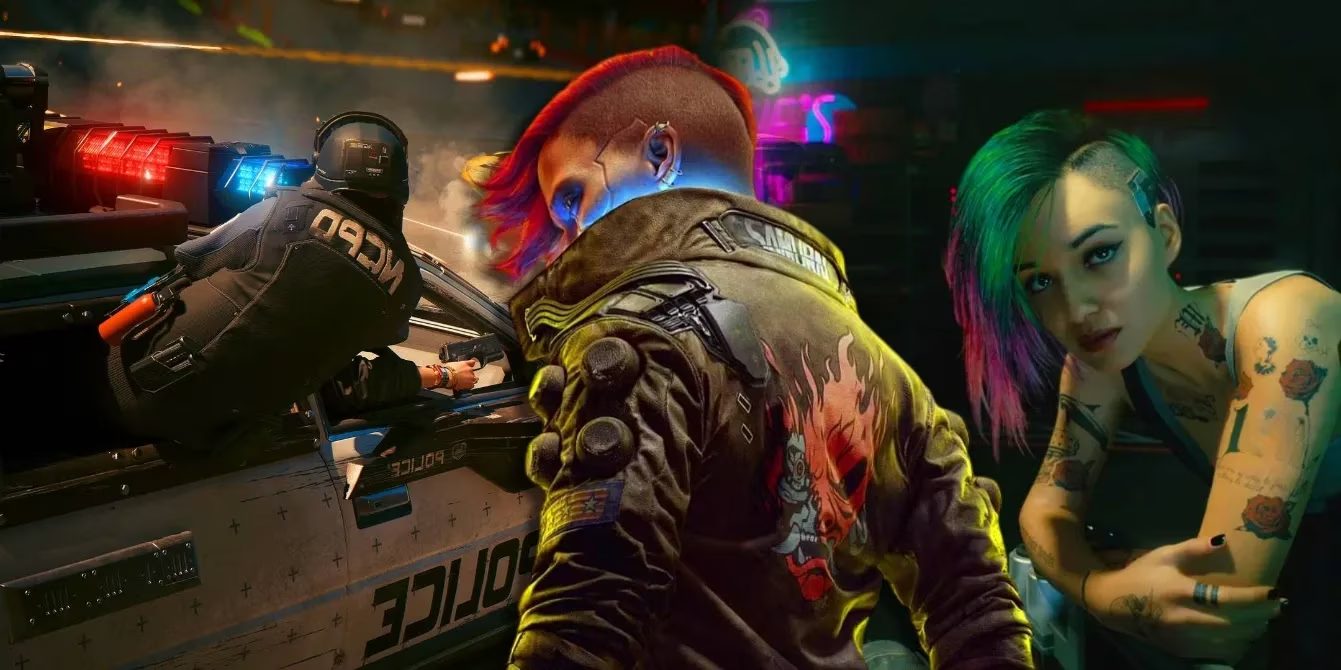
Let's break it down. I lived through Cyberpunk 2077's launch. The scale of that game was its own worst enemy. They promised the moon, the stars, and all the neon-lit streets in between. The world was massive, sure, but it came at a cost. Remember how so many of the side gigs felt... disconnected? Like, here I am, V, literally dying with a terrorist's engram in my head, and some fixer wants me to go pick up a stolen datashard from across town. The tone whiplash was real sometimes. The core story and characters—Johnny, Panam, Judy—were absolutely stellar, no argument there. But the foundational stuff, the basic systems and performance? They took a backseat to building that expansive, beautiful, but sometimes hollow world.
So, when I see CDPR aiming for the "most realistic" crowd system ever, a part of me gets excited. Imagine Night City where every NPC has a life, a routine, reacts to your actions in meaningful ways! But another, more cautious part of me whispers: At what cost? Can they pull this off without the other parts of the game suffering? The original's biggest downfall wasn't a lack of vision; it was that the vision was so huge it collapsed under its own weight before they could shore up the foundations.
The Silver Lining and Lessons Learned
Okay, deep breath. Let's not doomscroll just yet. It's important to remember the context. A job description is not a public marketing campaign. It's an internal goal, a target for the devs to aim for. That's a world of difference from shouting promises from the rooftops to generate hype. And we have to give credit where it's due: CDPR has shown they can learn. Look at Phantom Liberty. That expansion was tighter, more focused, and universally praised. It was quality over quantity, and it rocked.
They've even talked about applying these hard-earned lessons to The Witcher 4, reportedly taking a more conservative approach to scale. If they're practicing restraint there, it gives me hope they'll carry that wisdom over to Project Orion. The studio's reputation has been painstakingly rebuilt, much like the legendary comeback of No Man's Sky. They have a proven foundation now—the current Cyberpunk 2077 is one of the most immersive worlds I've ever jacked into. They've got the tech, the art, the writing chops. What they need is the discipline.
My Hope for Project Orion
So, where does that leave a fan like me, staring at the future from my megabuilding apartment? Hopeful, but with my guard up. Project Orion has all the potential to be CD Projekt Red's masterpiece. They have the experience, the tools, and a community that's now fiercely loyal because they saw the redemption arc happen in real-time.
The key, I think, will be in the focus. Don't just give me a bigger crowd; give me a smarter one. Don't just expand the map; deepen the stories within it. Let the ambition serve the experience, not the other way around. The long development cycle (with The Witcher 4 ahead of it) is actually a good sign. It means they have the time to bake this thing properly, to iterate, to test, and to ensure that when they finally say "It's ready," they mean it.
In the end, the journey of Cyberpunk 2077 taught us all a lesson—fans and developers alike. It's a story of failure, perseverance, and ultimately, spectacular success. For Project Orion, the stage is set. The developers have walked through the fire. Now, they have the chance to show us what they've learned, to deliver not just a sequel, but an evolution. I'll be here, waiting in the neon glow, ready to dive back into the net. Let's just hope this time, the landing is a little smoother.
