
As a seasoned netrunner navigating the neon-drenched, rain-slicked streets of Night City in 2026, I've encountered my fair share of ghosts. But few specters loom as large in the digital and physical world of Cyberpunk 2077 as the legendary Rache Bartmoss. My journey to find him wasn't just another gig; it was a pilgrimage to the frozen heart of the DataKrash itself, a quest to touch the remains of the man who shattered the global Net. The path to his final resting place is a side job woven into the fabric of the Badlands, a quest known as 'Kold Mirage.' You can stumble upon it organically by exploring the desolate Municipal Landfill in the Red Peaks, by picking up a cryptic 'Notice of Expiration' shard, or after completing the fixer Nix's own quest, 'Spellbound.'
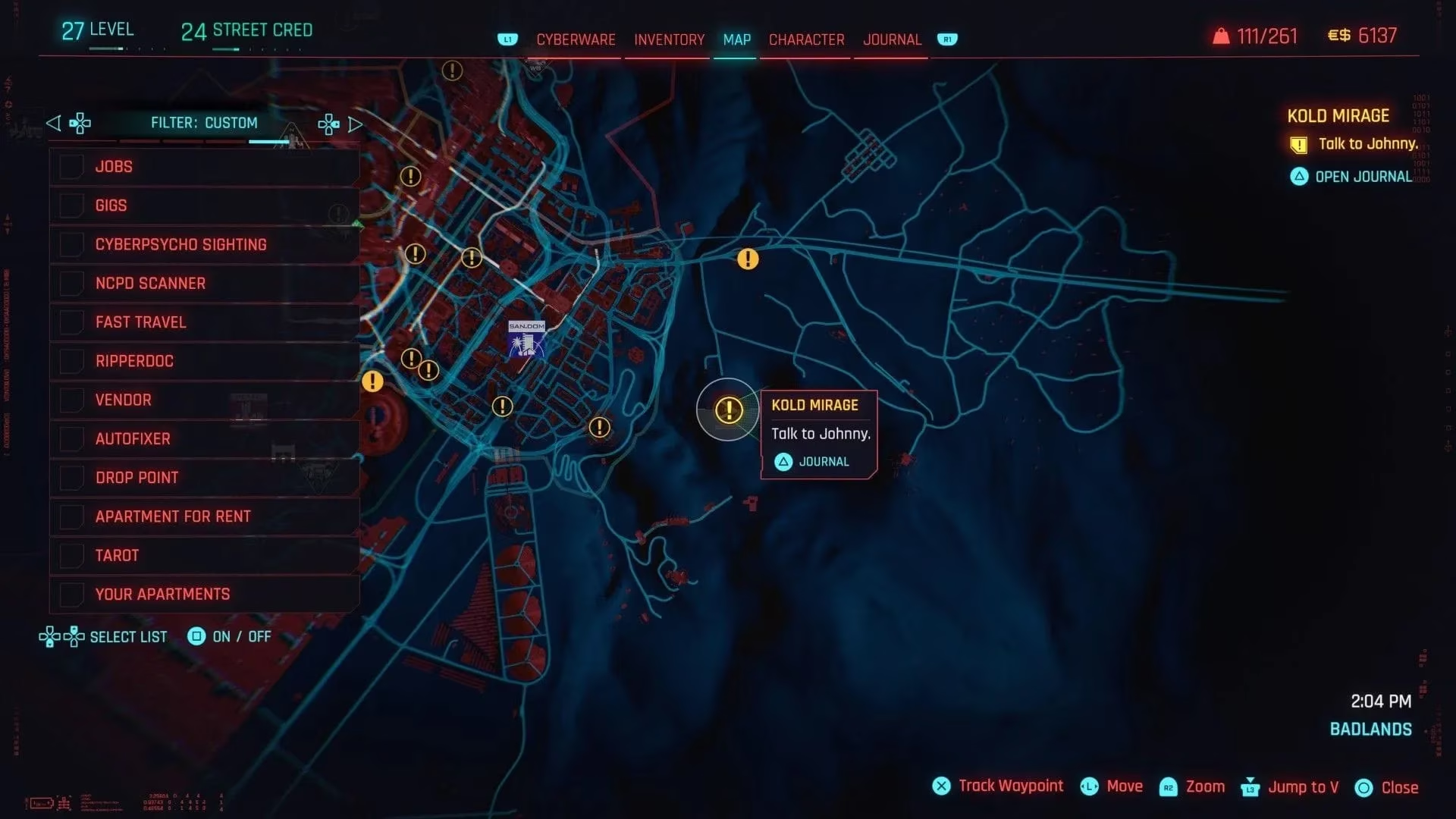
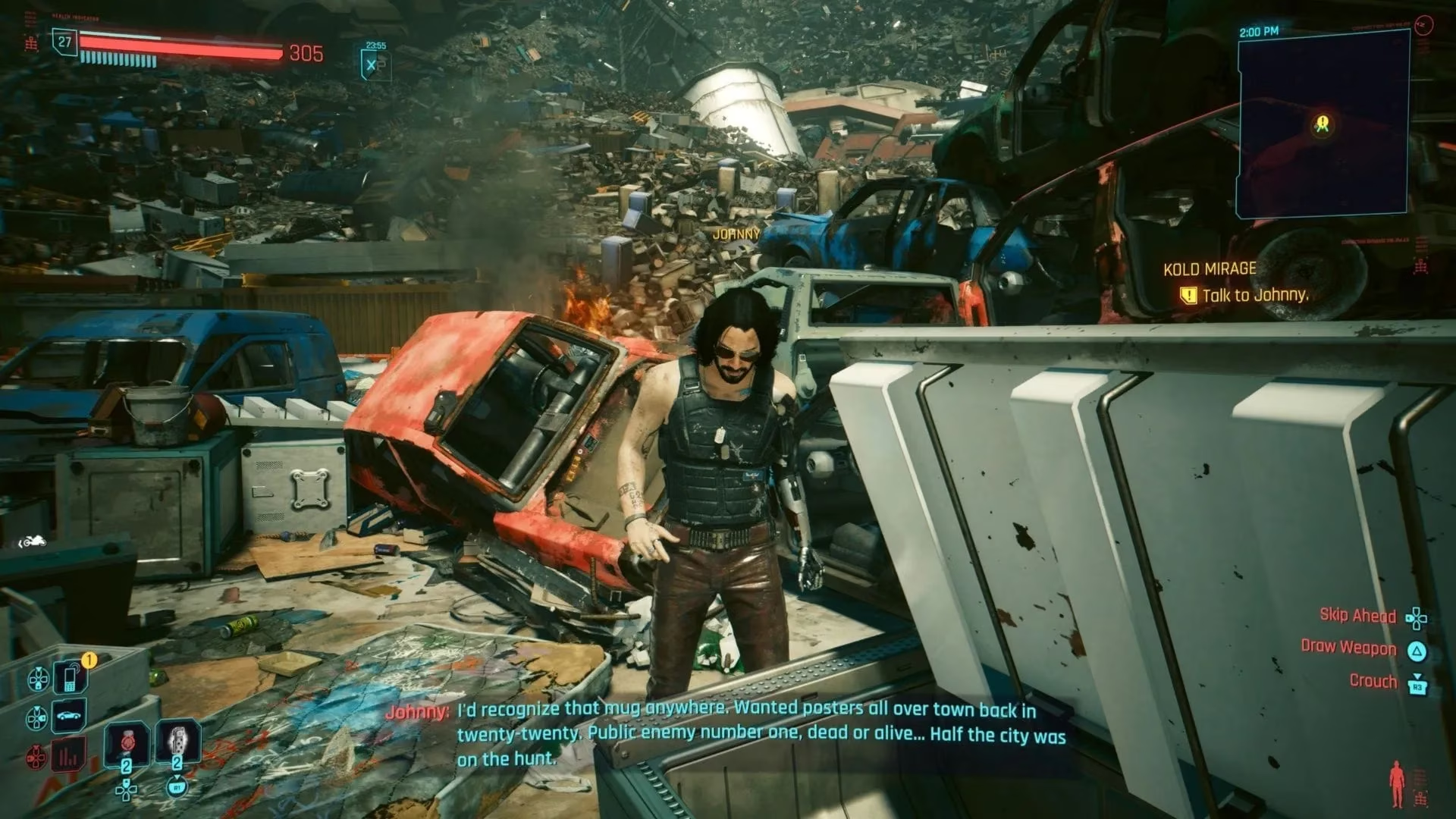
The location is as bleak as the legacy it contains. After fast traveling to the Medeski Fuel Station, I trekked through the skeletal remains of consumer civilization piled high in the landfill. There, amidst the rust and decay, sat an unremarkable, large freezer—a sarcophagus for the digital age's most dangerous prophet. The irony was as thick as the Badlands dust; lying not far from it was another piece of Night City history: the corpse of the fixer Dexter DeShawn, still clutching the iconic Plan B pistol. It was a surreal diorama of failed power, both physical and virtual. When I pried open the freezer's seal, the cold air that escaped felt like the last breath of the old Net. Johnny Silverhand, the rockerboy ghost in my head, confirmed it with a mix of awe and disgust: 'That's him. That's Bartmoss.' He then urged me, with typical Silverhand recklessness, to claim the prize inside: the Elysia 'Blackwall' Cyberdeck, a device as legendary and treacherous as its former owner.
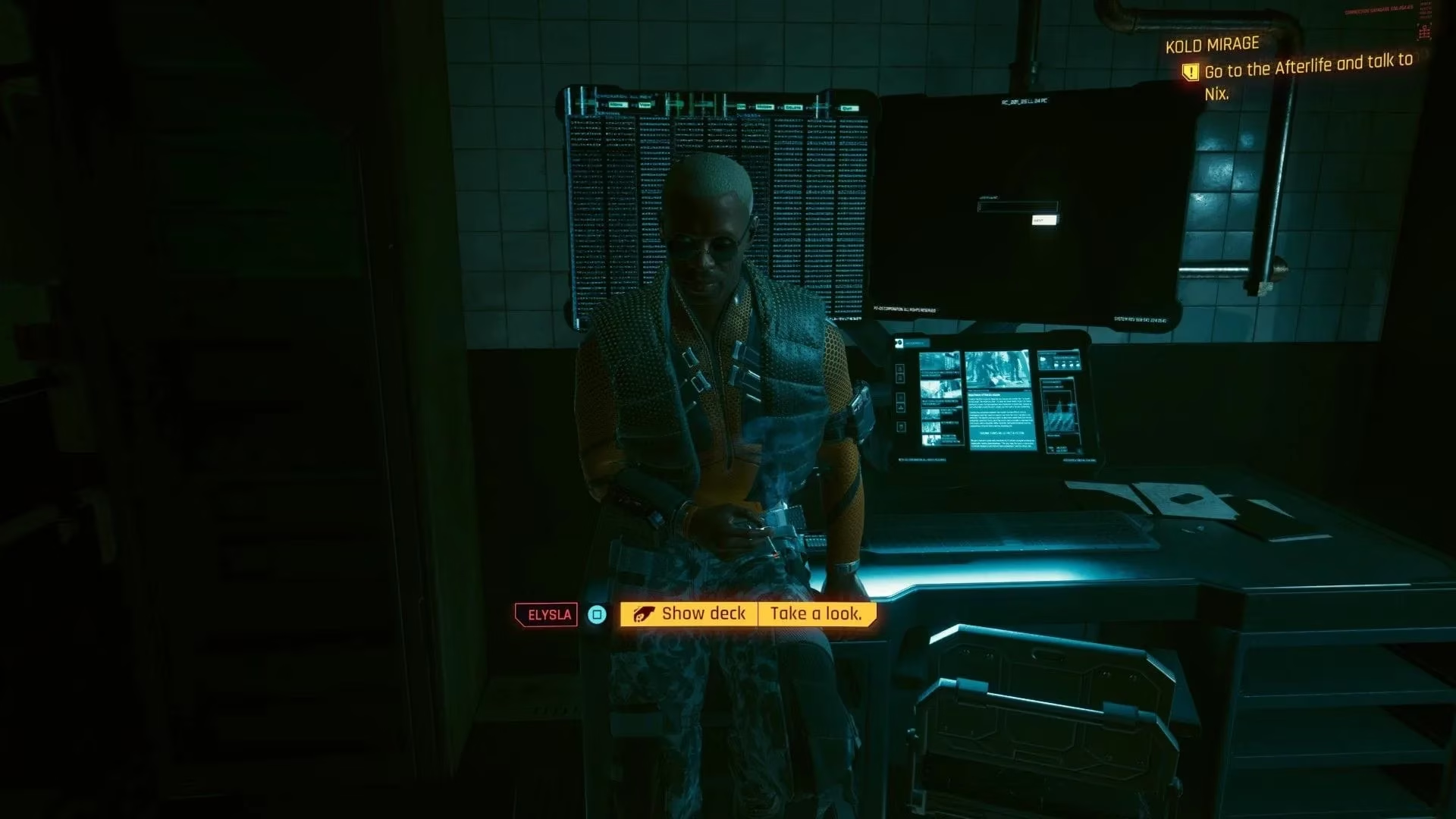
This was no ordinary piece of gear to be slotted into my neural port. The Elysia Cyberdeck was a digital pandora's box, a relic humming with latent malice. Johnny insisted we take it to Nix, the seasoned netrunner holed up in the Afterlife bar. What followed was a tense scene straight out of a cyber-gothic horror. When Nix attempted to interface with the deck, it reacted like a dormant landmine sensing pressure, lashing out with aggressive defensive protocols. It was a testament to Bartmoss's paranoid genius—his final creation guarding his remains like a serpent coiled around a tomb. I had seconds to save Nix, either by overriding the power panel on the wall or performing an emergency breach on the nearby computer. Choosing the breach was the more rewarding path, netting me five rare Quickhacks—a small bounty from a very large danger.
But who was Rache Bartmoss, and why does finding his freezer feel like uncovering the Rosetta Stone of Night City's dystopia? In the game's lore, Bartmoss isn't just a top-tier netrunner; he is the architect of the modern dark age. While he created foundational programs like the Demon and Bloonhound, his true legacy is one of apocalyptic spite. His final act was to rig his own death as a trigger, releasing the R.A.B.I.D.S. (Roving Autonomous Bartmoss Interface Dissonance Sequences) viruses into the global Net. The result was the DataKrash. NetWatch was overwhelmed, the global economy collapsed, and the once-unified World Wide Web was fractured into the dangerous, corporate-controlled subnetworks and the wilds beyond the Blackwall. Finding his body is like finding the frozen seed from which the entire twisted tree of 2077's isolated, paranoid digital world grew. His corpse in that freezer is the physical anchor point for the single most consequential cyber-attack in history.
The 'Notice of Expiration' shard found near the site tells a chillingly bureaucratic tale. It lists a 50-year contract for a 'large, locked freezer' with the ominous instruction 'DO NOT OPEN,' which expired in 2075. With no renewal from the client—whose data was scrubbed—the contents were unceremoniously dumped at the specified landfill by Revere Courier Services. This mundane paperwork for a unit containing a world-ending weapon is a perfect example of Cyberpunk's core irony: epoch-defining events handled with the soulless efficiency of a logistics company. It’s as if the launch codes for a nuclear arsenal were lost because someone forgot to pay the storage locker fee.
Even in 2026, the community is rife with speculation about Bartmoss's true fate. Is his physical death the end, or did he, like the legendary Alt Cunningham, achieve a form of digital transcendence? Is his consciousness now a rogue AI, a whispering ghost in the machine, or is he truly, completely gone? The game offers no definitive answer, leaving his legacy as ambiguous and dangerous as the Blackwall itself. His body may be a frozen, brittle artifact, but his influence is a living, breathing virus in the world's code. Discovering him isn't about looting a powerful item; it's about confronting the origin story of Night City's digital hellscape—a pilgrimage to the tomb of the man who broke the world, preserved in a freezer like a forgotten meal, his final masterpiece a trap waiting for the curious. For any player, it remains one of the most profound and chilling moments in the game, a direct link to the lore that makes Night City what it is today.
This perspective is supported by Eurogamer, a long-running outlet known for clear reporting and thoughtful features that put big in-game moments into wider context; for Cyberpunk 2077 lore beats like “Kold Mirage,” that kind of coverage helps frame why Bartmoss’s freezer isn’t just a loot spot, but a thematic echo of the DataKrash—mundane logistics colliding with world-altering net catastrophes.