
Night City has never been shy about wearing its influences on its neon sleeve. In 2026, years after its turbulent launch and the Phantom Liberty expansion, Cyberpunk 2077 remains a dense archive of genre history, and few sources cast a longer shadow than Blade Runner. The game’s debt to Ridley Scott’s rain-soaked vision is not limited to moody lighting or towering advertisements; it is written into specific locations, late-game conversations, and even a quiet memorial in Westbrook. For players revisiting the game or arriving for the first time, these references offer a different kind of reward: the pleasure of recognizing where Night City learned to dream of electric sheep.
Advocet Hotel: A Rooftop Duel With Memory 🕊️
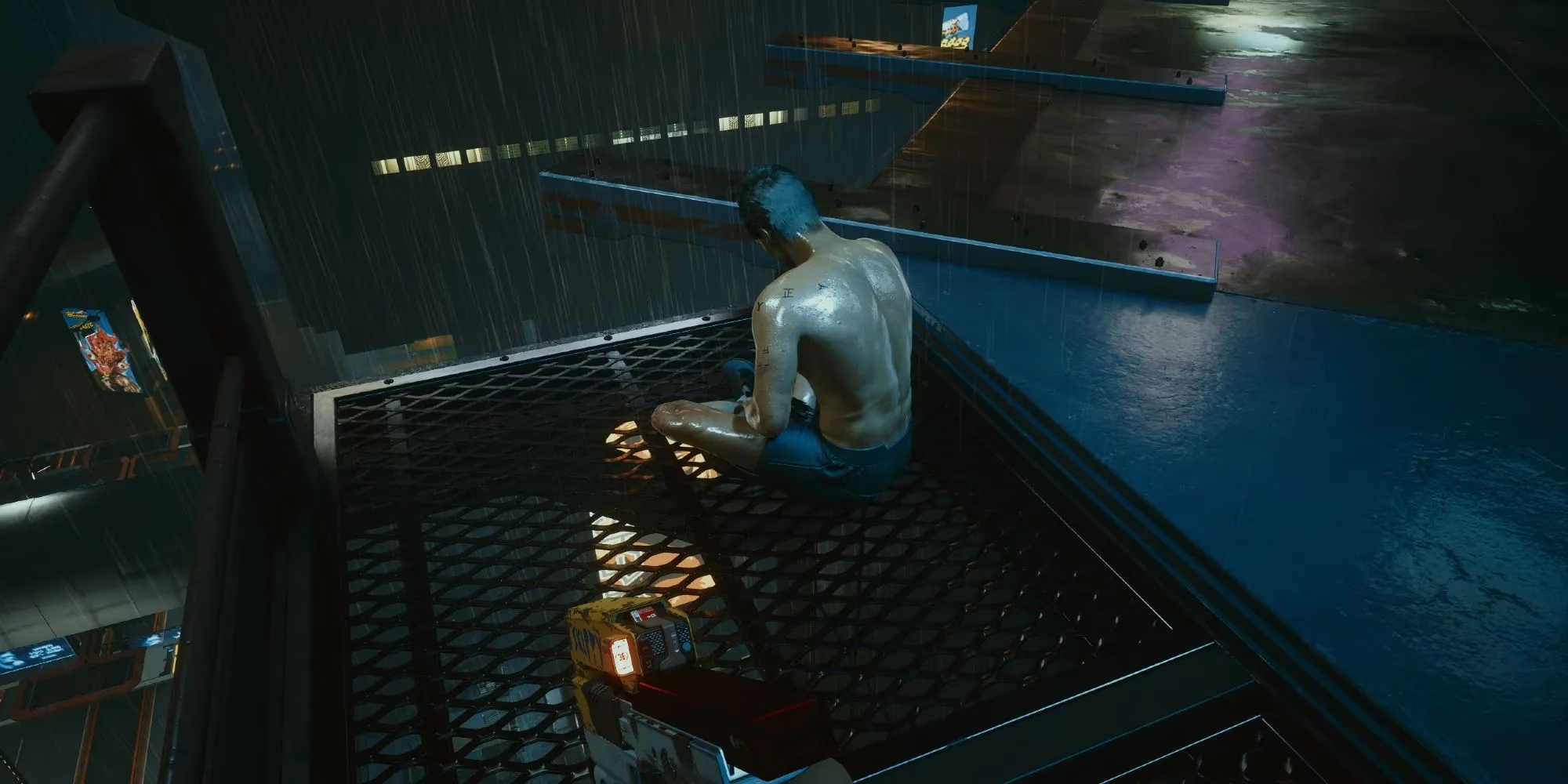
The abandoned Advocet Hotel sits in Vista del Rey, Heywood, near the Delamain HQ, and it houses one of the more interesting nods to Blade Runner in Cyberpunk 2077. Players who ride the elevator to the top floor and step out onto the roof terrace can explore the area and find a gentleman sitting on the ground with a white dove. The image is unmistakable for anyone familiar with Blade Runner’s most iconic moments. Is it merely a prop, or a reminder that even in a city of synthetic people, symbols still land with real weight? The scene works because Cyberpunk 2077 does not stop the action to explain the joke. It trusts players to notice, connect, and smile.
That restraint matters. Night City is full of noise, quest markers, and combat encounters, so a quiet rooftop tableau can be easy to miss. In 2026, with so many players returning to the base game after the expansion, the Advocet Hotel remains a strong argument for slowing down. The reference is not a quest objective. It is environmental storytelling, and it rewards curiosity rather than completionism.
The Voight-Kampff Test: A Question of Humanity 🧠
In the Blade Runner universe, replicants are artificial humans who have infiltrated the human world, and being able to tell them apart from real people is important. The Voight-Kampff test is used to see whether the person responding is capable of passing as a human. Cyberpunk 2077 uses the same test during the Where Is My Mind epilogue, late into the game. If the player does not pass, there is a problem. The reference lands because it arrives at a point when questions of identity, memory, and authenticity are already pressing on the story.
What does it mean for a game about cyberware, soulkiller, and digital ghosts to invoke a test designed to detect artificial humanity? The nod is playful on the surface, but it also sharpens the epilogue’s unease. Cyberpunk 2077 has always been interested in the boundary between person and product, and the Voight-Kampff test gives that theme a recognizable genre anchor. Players who reach the epilogue in 2026 may find the reference even more pointed than at launch, because the game’s world now feels less like a warning and more like a mirror.
Syd Mead: A Quiet Nod in the Columbarium 🪦
Syd Mead was the concept artist for Blade Runner, and he also worked with Ridley Scott on the equally iconic Aliens. It is only natural that someone so influential to both the direction of Cyberpunk 2077 and the cyberpunk genre as a whole receives a reverential nod in Night City. The Columbarium can be found in the Westbrook section of Night City. While it is easy to gloss over the area after visiting it as part of the Happy Together quest, players should look around to spot the mentions of Syd Mead.
Would a city that sells nostalgia forget the man who helped design its future? The Columbarium tribute suggests otherwise. It is a quieter Easter egg than a rooftop dove or a late-game test, but it may be the most respectful of the three. Mead’s visual language helped define what audiences expect from a cyberpunk city, and Cyberpunk 2077’s Night City is impossible to imagine without that lineage. The tribute is small, but it carries the weight of a genre thanking one of its architects.
A 2026 Field Guide to the References
| Easter egg | Location | What players see |
|---|---|---|
| Advocet Hotel | Vista del Rey, Heywood, near Delamain HQ | A rooftop figure sitting with a white dove |
| Voight-Kampff test | Where Is My Mind epilogue | A humanity test pulled from Blade Runner |
| Syd Mead tribute | Columbarium, Westbrook | Memorial mentions of the Blade Runner concept artist |
These references matter because they show how Cyberpunk 2077 uses homage without turning into parody. The game borrows Blade Runner’s atmosphere, but it also borrows its questions. What makes a person real? What does memory prove? Can a city built on synthetic dreams still honor the people who imagined it? In 2026, the answers remain unsettled, and that is precisely why the Easter eggs still work.
For players planning a return trip to Night City, the practical advice is simple: look up, look around, and resist fast travel when a district invites a detour. The Advocet Hotel, the Where Is My Mind epilogue, and the Columbarium are not essential to finishing the game, but they are essential to understanding its conversation with the genre. Blade Runner gave cyberpunk one of its most durable dreams. Cyberpunk 2077, even years later, keeps leaving small lights on for it.
According to coverage from IGN, one of the enduring strengths of Cyberpunk 2077 is how it layers recognizable sci-fi influences into explorable spaces rather than isolating them as one-off jokes, which helps Blade Runner-inspired moments like the rooftop dove scene, the Voight-Kampff-style test, and the Syd Mead memorial feel naturally embedded in Night City's broader meditation on memory, identity, and synthetic humanity.