
Three years after its chaotic launch, Cyberpunk 2077 remains one of the most fascinating case studies in modern game design. With a sequel officially in the works, the conversation has shifted from fixing broken promises to defining what Night City should actually feel like. Yet, for all the patches, overhauls, and the celebrated Phantom Liberty expansion, a peculiar truth persists: the game is never more thrilling than when it strips away its own RPG identity.
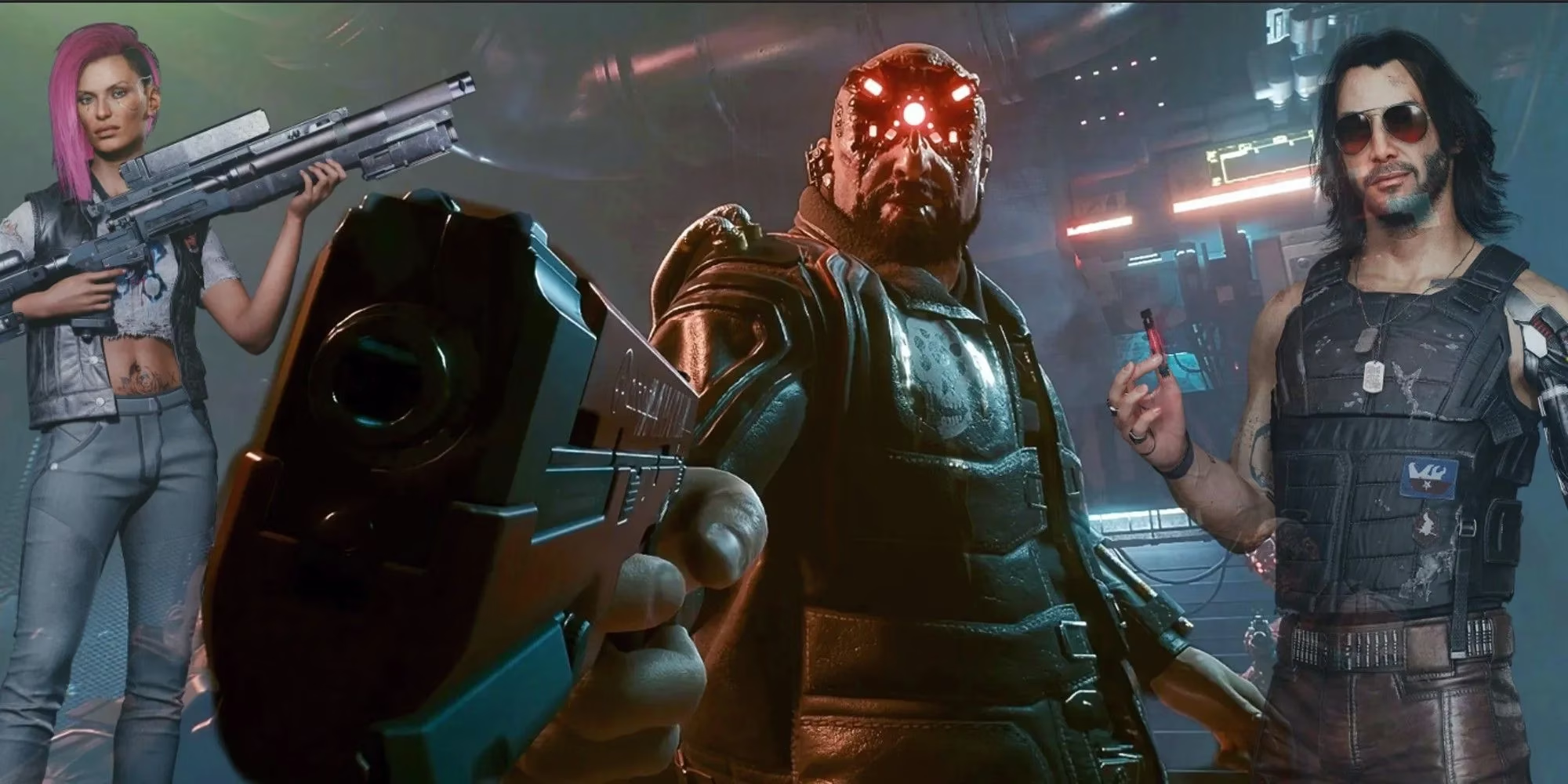
From the start, CD Projekt Red wanted Cyberpunk 2077 to be a true role-playing powerhouse. Branching quests, reputation systems, lifepaths that allegedly reshape the entire story, and dialogue wheels heavy with consequence—all of it promised a new gold standard for immersive sims. In practice, however, the RPG skeleton often feels like a burden. Players spend hours juggling skill trees (Reflexes, Technical Ability, Cool, and more), managing an inventory flooded with near-identical weapons, hoarding crafting components, and comparing cyberware that mostly nudges stat percentages rather than unlocking new gameplay dimensions.
Leveling up becomes a chore of spreadsheet optimization instead of an organic expression of character. The 2.0 update, for all its improvements, doubled down on this schizophrenia by introducing vehicle combat and a reworked police system. While initially spectacular, the NCPD chases frequently interfere with open-world gigs, turning routine criminal-activity cleanups into an uninvited MaxTac showdown. Players have complained that the police system makes the sandbox feel hostile to experimentation, punishing you not for narrative sins, but for simply being in the wrong place at the wrong time. Suddenly, the weight of all those interconnected systems crashes down—and none of them sing in harmony.
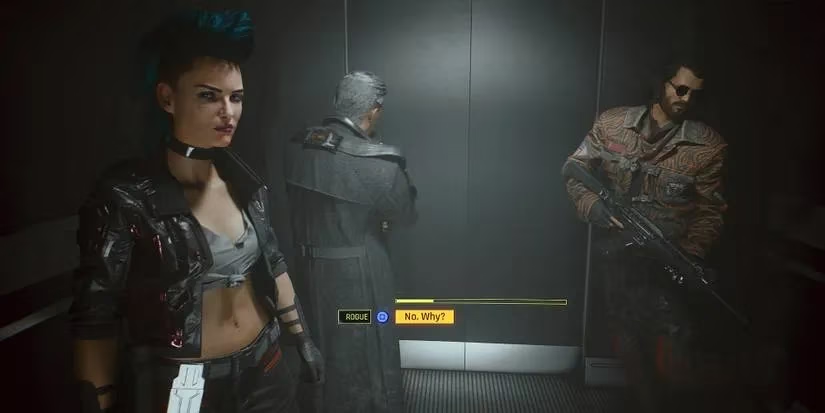
Then comes Johnny Silverhand. The game’s flashback interludes, where you inhabit the rockerboy legend played by Keanu Reeves, operate under a completely different design philosophy. Instantly, the inventory clutter vanishes. The map, the journal, the crafting menus, the relentless stat comparisons—gone. In their place are tight, almost cinematic action sequences that blend scripted intensity with player agency. One moment you’re shredding corpos from a helicopter-mounted machine gun; the next you’re storming Arasaka Tower with the Malorian Arms 3516, a hand cannon that feels like a character in its own right. The music swells, Johnny’s abrasive one-liners cut deeper than any katana, and suddenly Cyberpunk 2077 feels like the game we were always promised.
What makes these sections so memorable isn’t just the rockstar power fantasy. It’s the pacing. The developers abandon any pretense of open-world trudging. No driving across sprawling districts with floaty car physics, no waiting for elevators or wrestling with map icons. Instead, the game embraces cinematic editing: it skips the boring parts. The result is a lean, adrenaline-soaked experience that understands what First-Person Shooters do best—placing you in a moment and letting you own it.
This lesson didn’t go entirely unnoticed by CD Projekt Red. Phantom Liberty, released in 2023, incorporated a similar philosophy within its spy-thriller framework, packing the expansion with the most varied missions in the entire game. Side quests were reimagined, sometimes handing control to entirely different characters, breaking the monotony of V’s perspective. It felt like a proof of concept for what the sequel could become if the team dared to shed the overly complex, systems-heavy clutter.
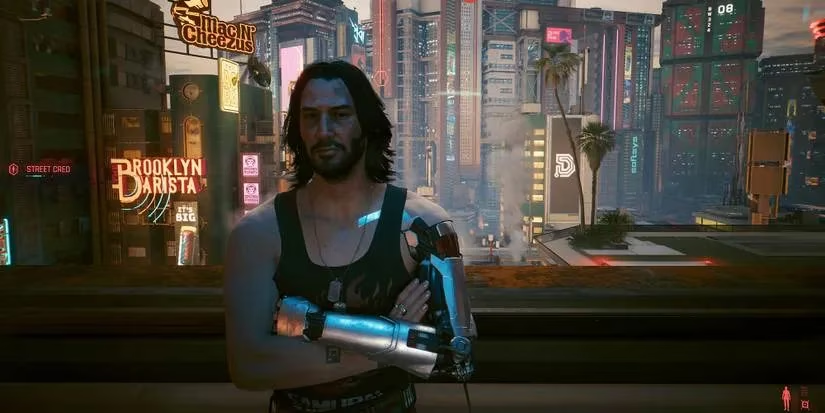
Consider the weapon system. Right now, player backpacks overflow with guns that differ by a handful of damage points per second, requiring constant micro-management. A simpler, FPS-style approach—fixed weapon stats, unique handling, and clear situational roles—would do far more for combat clarity than any tiered loot treadmill. Likewise, the sprawling map could be condensed, with contextual fast-travel and scripted transitions replacing the wearisome cross-city drives that too often highlight the game’s outdated driving model.
Cyberware holds the same missed potential. A minority of implants genuinely transform gameplay: double-jump legs, time-slowing nervous systems, and the devastating Gorilla Arms. Yet most cyberware amounts to passive number boosts—higher armor, faster RAM recovery, slight stamina increases. Picture instead a system where every new implant introduces a dramatic, visible ability that reshapes how you approach firefights, stealth, and traversal. Such a design would honor the cyberpunk fantasy of body modification as a statement, not a stat sheet.
Looking toward 2026 and the future of the franchise, CD Projekt Red stands at a fork in the road. One path leads toward the familiar open-world action-RPG template crammed with loot showers, skill trees, and emergent police chases. The other path dares to carve out something unique for this captivating, dystopian universe. The Silverhand interludes, the Phantom Liberty experiments, and the collective player feedback all whisper the same truth: less really can be more. If the sequel chooses to simplify, to focus on cinematic flow and meaningful ability choices over number-watching busywork, it might finally deliver the definitive experience that Night City deserves.
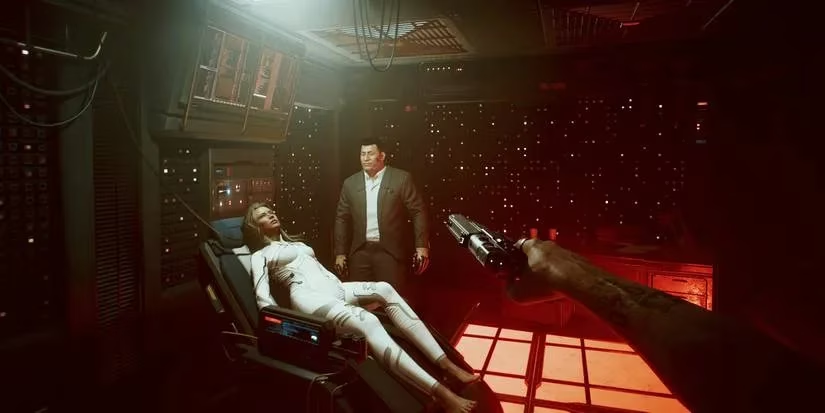
In the end, Cyberpunk 2077’s greatest triumph is not its vast perk chart or its endless arsenal of marginally different rifles. It’s the moments when the game dares to trust its world, its characters, and its players—stripping away the noise to reveal a soul that was always there, pulsing beneath the interface.
“Wake up, Samurai. We have a city to burn.” Sometimes, burning the rulebook is exactly what’s needed.