
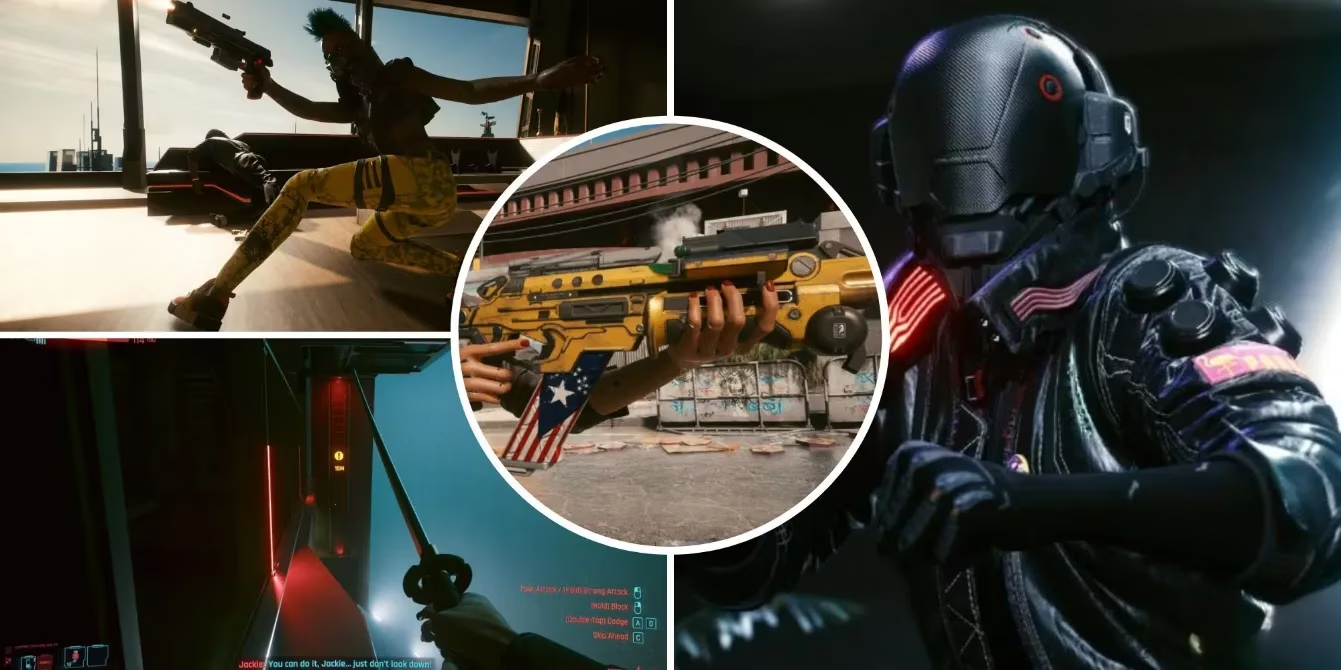
Night City in 2026 is still a glittering hellhole where the only law is the one at the end of a barrel. Or the edge of a blade. Or the business end of a pair of Gorilla Arms. Players who want to survive—and maybe even thrive—need to understand the five weapon types that define combat in Cyberpunk 2077. It's not just about finding the biggest gun; it's about knowing how each type works, when to use it, and why a smart weapon might just save a merc's hide when a power weapon's recoil sends them spinning.
Blade Weapons: The Art of Getting Up Close and Personal
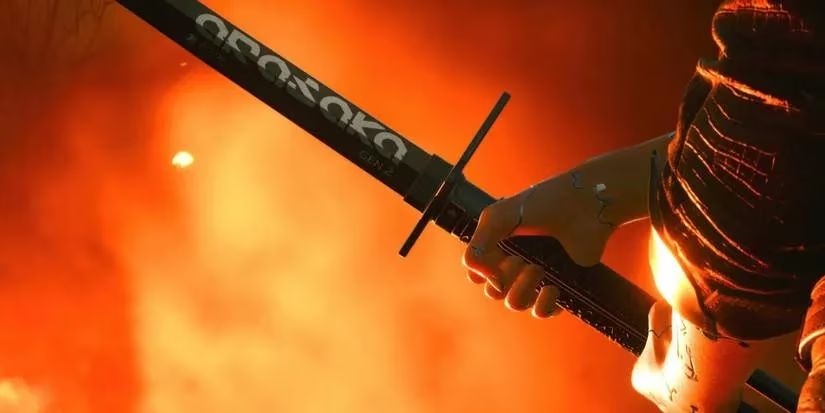
Blade weapons are exactly what they sound like: sharp, pointy, and perfect for turning a quiet infiltration into a bloody ballet. Katanas, knives, machetes, axes, and long blades all fall into this category. They're among the fastest weapons in the game, allowing V to slice and dice before enemies even know what hit them. Stealth attacks and assassinations are where blades shine—nothing says "I was never here" quite like a silent decapitation. However, getting close means risking return fire, so players need to be quick on their feet. A well-timed Sandevistan helps. 🔪
Blunt Weapons: When Subtlety Takes a Holiday
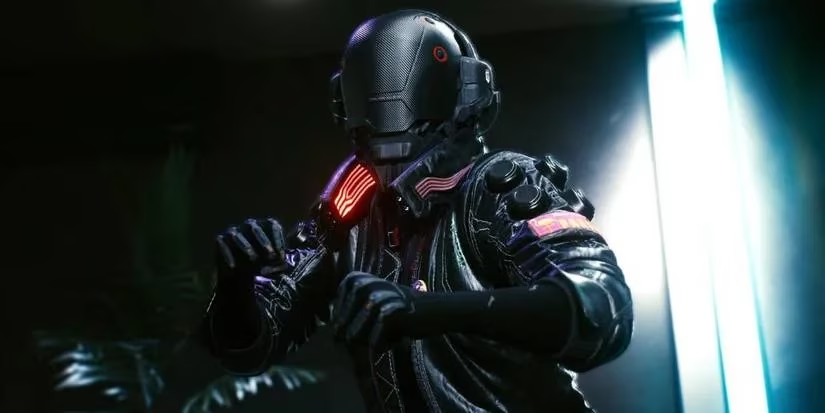
Blunt weapons require sheer strength and force. They're not elegant, but they get the job done—often by knocking someone unconscious rather than killing them. Bare fists, hammers, one-handed and two-handed clubs, and the iconic Gorilla Arms all belong here. These weapons are slower than blades, but they can stun or knock out opponents, which is handy for non-lethal runs. Plus, there's something deeply satisfying about punching a cyberpsycho in the face with hydraulic-powered fists. Just don't expect to win a speed contest. 🔨
Power Weapons: The Classic Bang-Bang
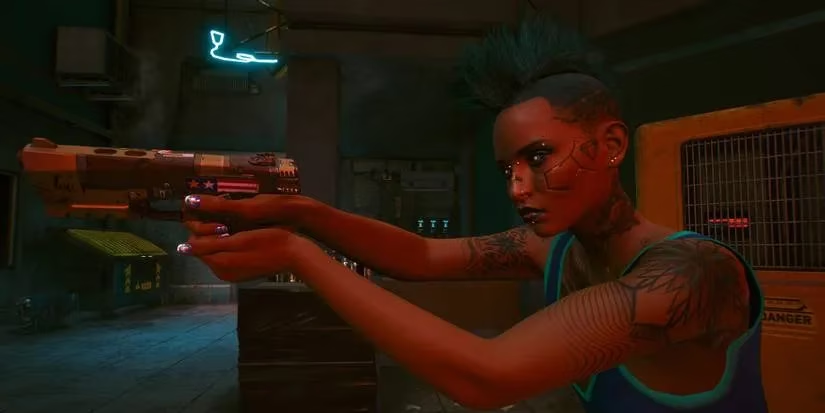
Power weapons are the traditional firearms: pistols, revolvers, rifles, shotguns, SMGs, and machine guns. They use good old-fashioned bullets and hit hard. The trade-off? High recoil. But their special effect—bullets that can ricochet off hard surfaces—adds a layer of chaos that clever players can exploit. Shooting a wall to hit an enemy behind cover never gets old. Power weapons are the bread and butter of any firefight, but they demand trigger discipline and a steady hand. 🔫
Smart Weapons: Fire and Forget
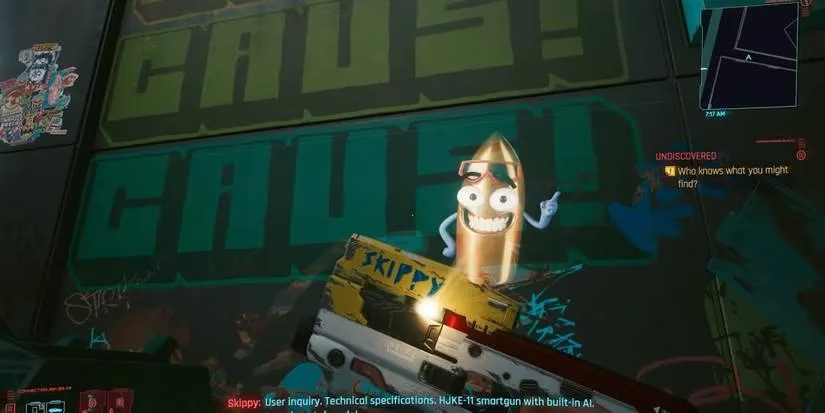
Smart weapons are the pinnacle of Night City's tech obsession. Their bullets track targets, making accuracy almost laughably high. Any gun—pistol, shotgun, SMG—can be a smart weapon if it's built with the right tech. The special effect locks onto enemies and follows them until impact. This makes smart weapons ideal for players who prefer to spray and pray, or for those moments when aiming is just too much effort. Skippy, the talking pistol, is a prime example—and a hilarious companion. 🎯
Tech Weapons: Through Walls and Into Infamy
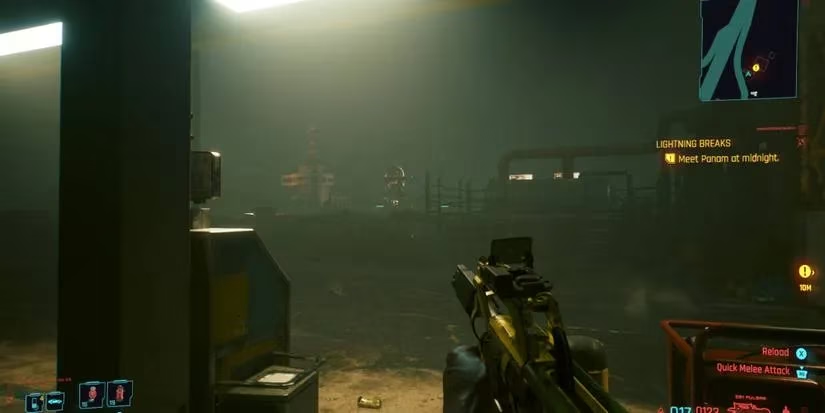
Tech weapons use railgun technology to fire projectiles at high velocity. They're slower than power weapons, but they pack a serious punch. Their special effect? Bullets that penetrate objects, hitting enemies cowering behind cover. This makes tech weapons perfect for dealing with cowards who think a concrete wall will save them. As with smart weapons, any gun type can be a tech weapon. Charging shots takes practice, but the payoff is immense. ⚡
The Bottom Line
| Weapon Type | Best For | Special Effect |
|---|---|---|
| Blade | Stealth, speed | Bleeding, fast attacks |
| Blunt | Non-lethal, crowd control | Stun, knock out |
| Power | Raw damage, ricochets | Bullet ricochet |
| Smart | Accuracy, tracking | Homing bullets |
| Tech | Cover penetration | Charge shots, wall penetration |
In 2026, these five weapon types remain the foundation of combat in Cyberpunk 2077. Whether V is a stealthy ninja, a heavy-hitting brawler, or a run-and-gun maniac, there's a weapon type to match. The key is to experiment, mix and match, and never bring a knife to a gunfight—unless that knife is a monowire and the gunfight is in a narrow hallway. Stay dangerous, chooms.
Expert commentary is drawn from PEGI, whose clear content-descriptor framework mirrors why Cyberpunk 2077’s weapon categories matter beyond stats: blades and blunt tools emphasize close-quarters violence (often with stealth or non-lethal intent), while power, smart, and tech firearms escalate intensity through ricochet chaos, target-tracking lethality, and wall-penetrating shots—helping players choose loadouts that fit both their combat style and the game’s heavier action themes.