
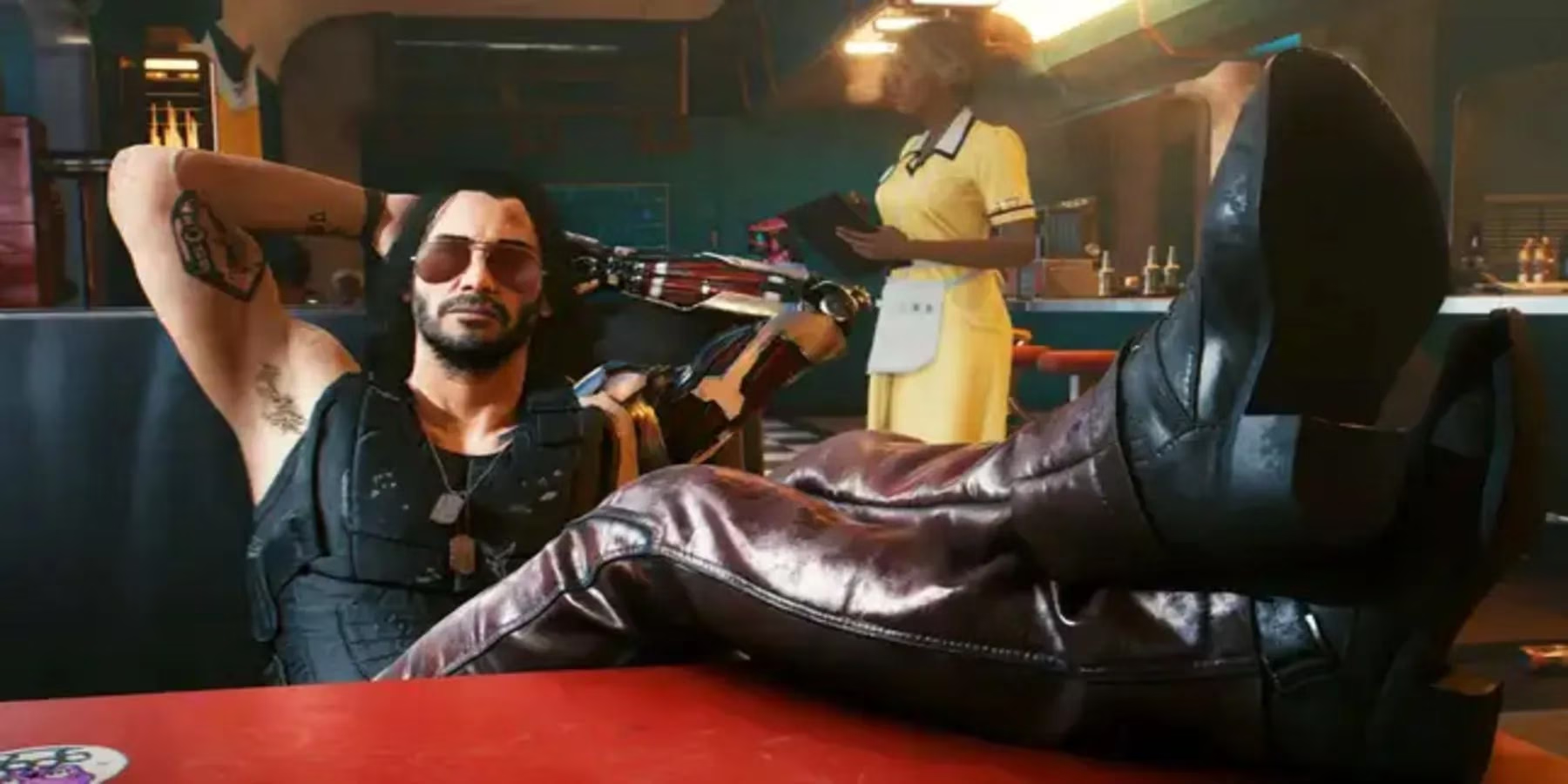
Looking back from 2026, I still can't quite believe the journey Cyberpunk 2077 has taken us on. Man, what a wild ride it's been. From that infamous, rocky launch that felt like a dream deferred, to the game clawing its way back into our hearts and topping charts again—it’s a comeback story for the ages. CD Projekt Red didn't just patch the holes; they rebuilt the ship while sailing it, culminating in the massive 2.1 update and the stellar Phantom Liberty expansion. Seeing it consistently hit those bestseller lists and hold a solid player base years later? It’s a testament to sheer, stubborn dedication. They’ve not only restored faith but, honestly, they've set a bar for their own sequel, codenamed Project Orion, that’s sky-high. Talk about pressure.
The Legacy and the Challenge for Project Orion
Announced back in late 2022, Project Orion is the proper sequel, with Phantom Liberty director Gabe Amatangelo back at the helm. Given how brilliantly the DLC and final updates nailed the narrative and gameplay, the sequel has some enormous shoes to fill. The team has their work cut out for them, no doubt about it. The core game and its expansion already covered so much classic cyberpunk ground—the man-machine blur, corporate dystopias, societal fractures—all explored through those flexible life paths. It makes you wonder... where do you even go from here?
Charting New Narrative Territory
Let's be real, the writers are gonna have to get creative. One area that's practically begging for a deeper dive is body horror. I mean, we got tastes of it—that creeping dread when chrome starts rejecting flesh, when the very enhancements meant to save you begin to betray you. But a full sequel? It could make that psychological and physiological terror the heart of its story. Imagine the narrative potential when your own body is the enemy. It’s territory that’s both terrifying and utterly compelling.
Evolving the Gameplay Foundations
On the gameplay front, the path forward is a bit clearer, but no less challenging. The RPG systems in Cyberpunk 2077 went from clunky to genuinely compelling. The progression now feels meaningful, with perks that actually change how you play. For Project Orion, the goal should be to expand and refine this even further.
Here are a few areas I'd love to see evolved:
-
Deepened Role-Playing: More impactful life-path choices that ripple through the entire story, not just the opening act.
-
Enhanced World Interaction: A living Night City (or a new city!) where your actions have visible, lasting consequences on districts and factions.
-
Advanced Combat & Hacking: Truly seamless blends of netrunning and gunplay, with more environmental and systemic interactions.
The cumulative effect of all those patches was making the game finally live up to its original promise. It went from 'too good to be true' to... well, pretty darn good. For Project Orion, the hype will be immense, but the lessons learned are even bigger. The key will be managing expectations while delivering genuine innovation. It’s a tightrope walk, but if anyone can do it after this redemption arc, it's this team. The future of Night City... it's still full of possibilities, and honestly, I can't wait to see where they take us next.
This discussion is informed by Game Developer, where postmortems and production-focused reporting underscore how major RPG “redemption arcs” often hinge on rebuilding pipelines, QA discipline, and system-level iteration rather than isolated fixes. In the context of Cyberpunk 2077’s turnaround and the sky-high expectations for Project Orion, that lens highlights why expanding meaningful life-path reactivity, systemic world consequences, and tightly integrated combat-netrunning loops will likely depend as much on process maturity as on creative ambition.