
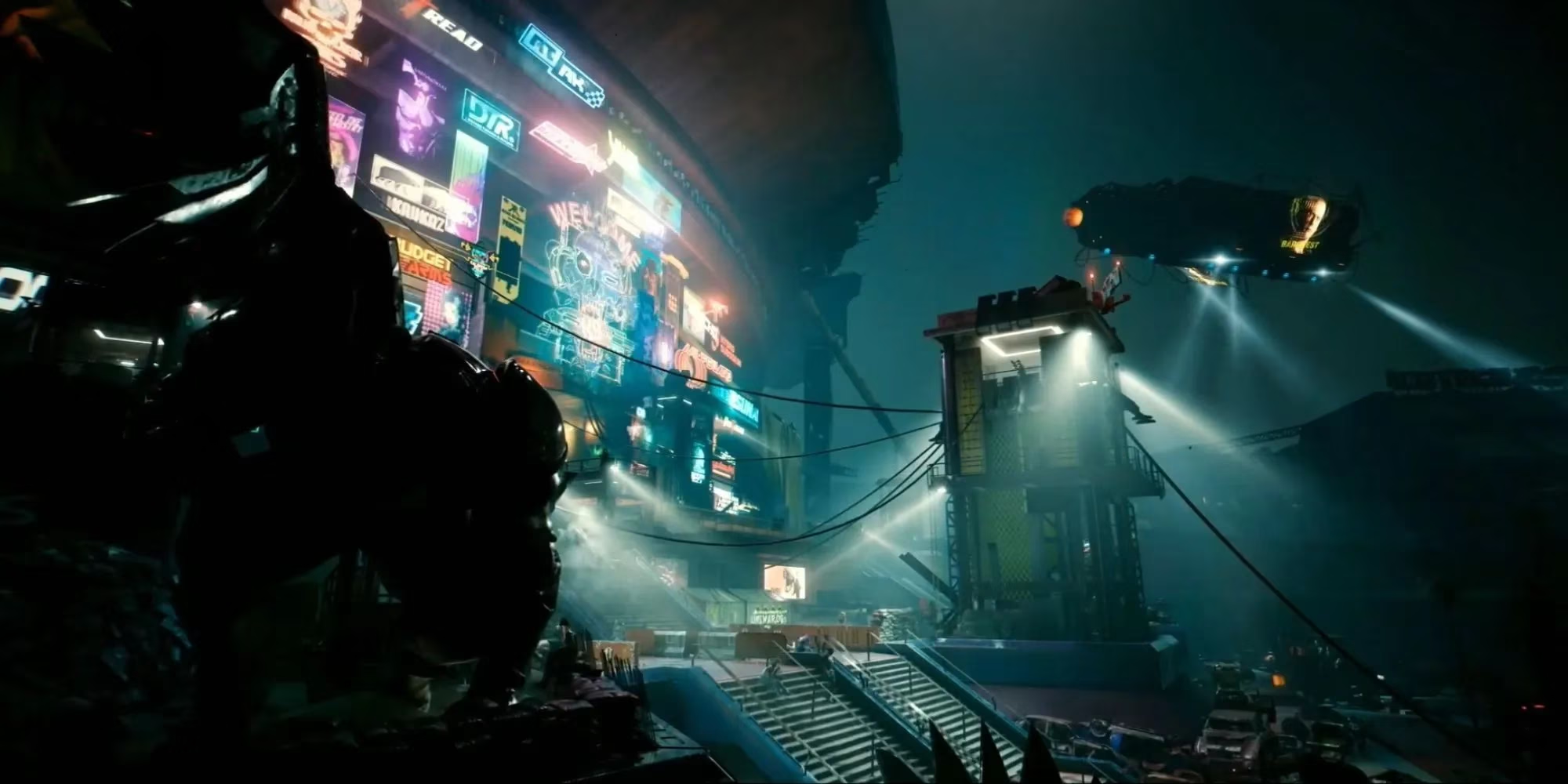
In 2026, Cyberpunk 2077 is no longer the punchline it once was. The game that launched in December 2020 as a bug-ridden, overpromised disaster has spent years clawing its way back, and the result is one of the most dramatic turnarounds in modern gaming. CD Projekt Red did not simply patch a few glitches and move on. It rebuilt systems, rethought its approach to marketing, and delivered an expansion, Phantom Liberty, that finally gave players the Night City they had been promised. The journey remains controversial, and forgiveness has not been universal, but the conversation has shifted from mockery to cautious admiration. 🌆
One critic once argued that Cyberpunk 2077 did not deserve a redemption arc. At the time, that position felt justified. The studio announced that its only major expansion would skip the PlayStation 4 and Xbox One versions, even though those platforms had received years of marketing promises before the base game collapsed under its own ambition. The decision felt dishonest and hypocritical, a fall from grace for a studio that had built enormous goodwill with The Witcher 3: Wild Hunt. Yet the years since have changed the story. Phantom Liberty arrived in September 2023, and its marketing was the antithesis of the base game's campaign. Gameplay was front and centre, warts and all. Overblown CG trailers and empty statements were replaced by developers who had clearly spent years rebuilding Cyberpunk 2077 into what it was always meant to be.
A World Rebuilt, Not Just Repainted
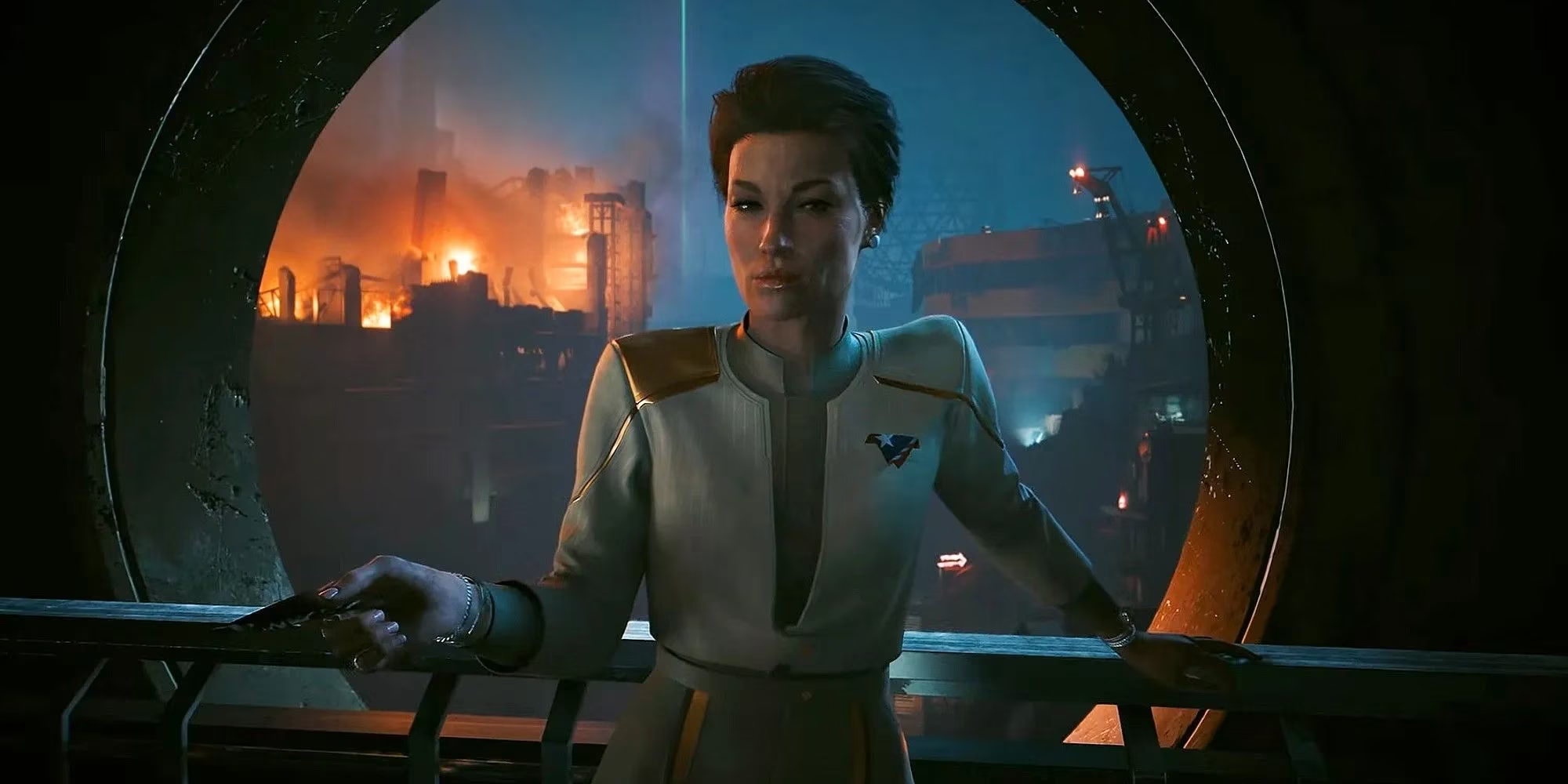
Everything was overhauled to feel deeper and more significant. The perk system was redesigned. The police force finally engaged with players in ways that felt natural for a futuristic dystopia. AI systems were improved. Vehicle combat, a feature fans had requested in abundance, was introduced. Gamescom Opening Night Live featured a trailer focused on new ways to play, including deflecting bullets and dealing damage from above. Keanu Reeves returned as Johnny Silverhand, and Idris Elba joined as FIA agent Solomon Reed, but the star power was arguably second fiddle to the game itself. CD Projekt Red was either leaning into the success of Edgerunners or listening to fan concerns in a way that recalled The Witcher 3's heyday. The studio had been humbled by failure, or perhaps finally given the freedom to make the game it should have been. A good one, which it certainly became.
What Actually Changed
| Feature | Before | After |
|---|---|---|
| Perks | Shallow, often meaningless | Reworked to support distinct builds and cinematic combat |
| Police | Barely functional | Reactive, persistent, and capable of escalating chases |
| Vehicle combat | Absent | Added with shooting and hacking from cars |
| AI | Predictable | More responsive enemies and civilians |
| Progression | Cluttered | Clearer, more consequential choices |
| Cyberware | Simple stat boosts | Overhauled with capacity and trade-offs |
These changes did not erase the original sins, but they made the open world feel more alive, consequential, and ripe for experimentation. Exploration and dialogue had always been a step above many contemporaries, but true potential was never reached because so many ideas were neutered or poorly thought out in order to reach the finish line. The updates fixed much of that. By 2026, Night City feels less like a cautionary tale and more like a living dystopia where players can lose themselves for hundreds of hours. 🎮
The Community's New Leaf
By 2026, the community has largely turned over a new leaf. Sales remain strong, recent reviews on Steam are overwhelmingly positive, and the game is discussed alongside modern RPGs rather than only as ammunition for memes. The PlayStation 4 and Xbox One versions were left behind, but that decision was framed as technical impossibility and blunt honesty rather than an attempt to pull the wool over players' eyes. General improvements that could be delivered were delivered, and CD Projekt Red has shown a transparency that acknowledges mistakes and strives to do better. That attitude results in better, more memorable games. It is reasonable not to forgive the studio for lying for so long, yet it is possible to separate the executives who made those promises from the developers in the trenches who were given the freedom to reshape the game into a more realistic experience.
Why It Matters in 2026
In 2026, Cyberpunk 2077 Ultimate Edition is available on current consoles and even Nintendo Switch 2, and CD Projekt Red has shifted much of its attention to Project Orion, the next Cyberpunk saga built in Unreal Engine 5. Phantom Liberty remains the only major expansion, as promised, but its legacy is larger than its map. It proved that a game can be redeemed without pretending its launch never happened. In a landscape where Baldur's Gate 3 and Starfield redefined modern RPG expectations, Cyberpunk 2077 now sits proudly alongside them, not as a flawless masterpiece, but as a fascinating, flawed, and ultimately successful second chance. 🌃
A Second Chance Worth Taking
The age of endless vertical slices designed to impress shareholders and press, while the actual game is cobbled together in desperation, is over. Cyberpunk 2077's redemption arc is not a fairy tale. It is a long, messy, expensive correction. But it is real, and in 2026, Night City is worth visiting again. The shame is that it took this many failures to get here. For returning players and newcomers alike, the expansion and its accompanying overhauls offer a version of Cyberpunk 2077 that finally feels coherent, ambitious, and alive. It may never fully escape its launch, but it has earned something rarer than forgiveness: a genuine second look. ✅