
Sweating over a single dialogue choice in a massive RPG is practically a gamer rite of passage. It's that moment when the controller suddenly feels heavier, and your thumb hovers over two options while your brain races through every possible butterfly effect. In Cyberpunk 2077: Phantom Liberty, this tension arrives early, smack dab in the middle of a high-stakes conversation with President Rosalind Myers. She asks V to take the oath of loyalty to the New United States of America, and the game freezes, waiting. No pressure, right? For a lot of players, this feels like a fork in the road that could lock them out of some sweet loot, an iconic weapon, or even a whole story branch. But here’s the kicker—it’s actually a whole lot of noise over nothing.
By 2026, the Phantom Liberty expansion has been pored over by theory-crafters and completionists alike, and one truth stands out like a neon sign in Dogtown: the oath choice is purely a flavor decision. Yep, you heard that right. No hidden doors swing open, no unique guns get shoved into your stash, and nobody suddenly turns hostile down the line because you refused to recite some lines. So why does it get so much brain space? Because Cyberpunk 2077 has a nasty habit of making even small choices feel monumental. Remember picking your lifepath and sweating over whether Street Kid was better than Corpo? Same energy. But sometimes a choice is just there to let you role-play, not to punish you.
Taking the Oath: Playing the Loyal Soldier
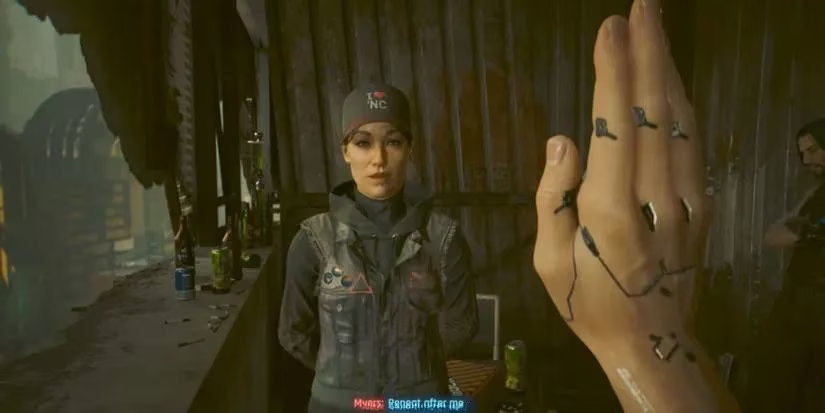
If a player decides to go along with the ceremony, V places their left hand on the NUSA coin and raises the right hand, classic oath pose. Johnny Silverhand, ever the rebel, practically chokes on his digital cigarette at the sight of it. The game then puts up a few lines of oath text, and the player has to select the responses that match what Myers says. The trick here is not to bail out by picking the “nevermind” option, because that just cuts the scene short and leaves V looking flaky. Once the ceremony wraps up, V pockets the fancy NUSA coin and officially becomes an agent. The vibe is very much “yes ma’am, no ma’am,” and Johnny will absolutely never let you forget what a sellout he thinks you are.
Rejecting the Oath: Sticking It to the System
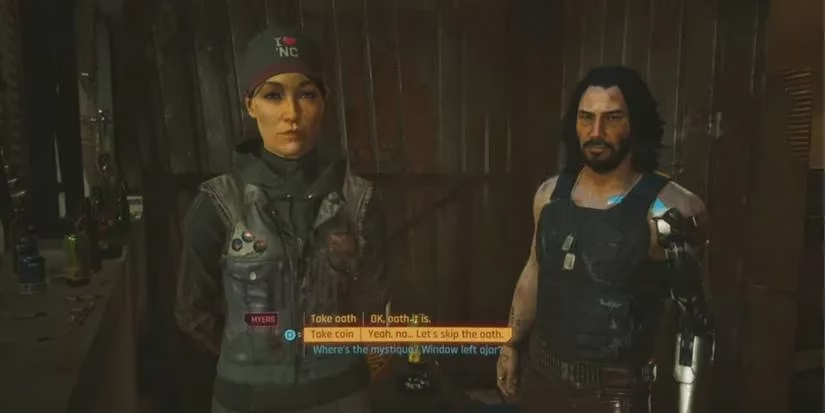
For those who can’t stomach the idea of pledging loyalty to a government that’s about as trustworthy as a wet paper bag, the refusal path feels like a breath of fresh air. Here, V picks up the coin but makes it crystal clear that they’re not playing ball. Myers’ expression sours for a beat; she’s not used to being told no, especially after sticking her neck out. But V stands firm, explaining that an oath like that means something, and they can’t promise allegiance to something they don’t believe in. Surprisingly, Myers accepts it with a bit of grace and even wishes V luck. Johnny? He’s practically glowing with approval, giving one of his rare nods of respect. It’s a moment that feels genuinely freeing, like V is telling the powers that be, “I’ll help, but I’m not your puppet.”
The Juicy Bits: What Do You Actually Get?
Now for the part that makes every min-maxer’s heart skip a beat: the rewards. Drumroll, please… they’re identical. Whichever road V takes, the outcome is the exact same set of goodies. After the scene wraps up, V is made a member of the agency—no strings attached either way—and gets that shiny NUSA coin. Myers even drops the ominous line that without this coin, Solomon Reed won’t hesitate to put a bullet in V’s skull. That line sends a lot of new players into a panic, thinking they somehow need to swear the oath to stay on Reed’s good side. Not so, choom. Reed’s allegiance is tied to the coin itself, not the ceremony. As long as V has the physical token—given regardless of the choice—Reed will recognize them as an ally.
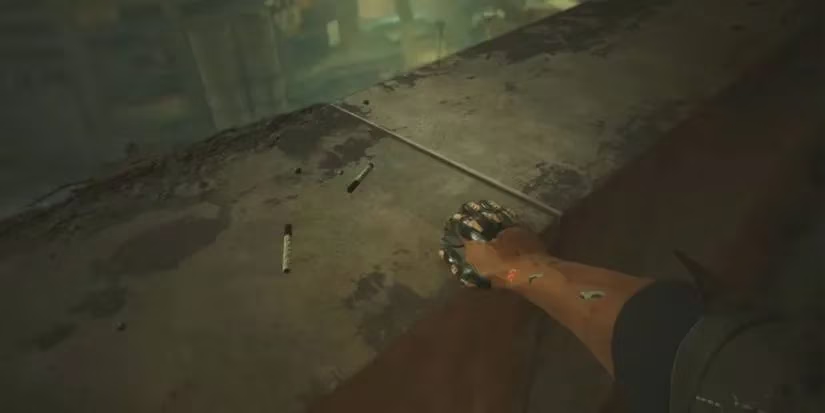
This design choice is honestly a relief for players who suffer from FOMO. Phantom Liberty added a truckload of new weapons, Side Gigs, and vehicles like the Type-66 “Hoon,” but none of that is locked behind taking or refusing the oath. The expansion respects your role-playing instincts without bribing you with unique loot. So if you’re the type of V who spits on authority, go ahead and snub Myers; if you’re a pragmatist who figures a little lip service is harmless, take the oath and enjoy Johnny’s annoyed commentary. Either way, the narrative rewards you with the same agency membership and the same access to everything Dogtown has to offer.
The Bottom Line: Role-Play Over Paranoia
Choice paralysis in games can be a real downer, but Cyberpunk 2077: Phantom Liberty does players a solid by making this particular fork purely cosmetic. The dialogue differences are delightful—Myers’ subtle annoyance versus her tight smile of satisfaction, Johnny’s grumbling versus his smug grin—but the game state doesn’t care one bit. So next time you’re staring at that screen, wondering whether to swear loyalty to a crumbling government, just ask yourself: “What would my V do?” Not what some guide says is optimal, not what unlocks the rarest toy, but what fits the story in your head. In the end, the only thing you’ll miss by overthinking is a few extra seconds of Johnny’s sarcasm. And trust us, you’ll get plenty of that either way.